





Addressing a Decades-Old Bottleneck
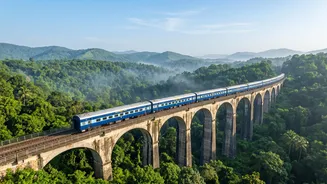
The rail link between Mumbai and Bengaluru has long been insufficient for the massive demand. For years, only one direct daily train, the Udyan Express, connected the two metropolises, taking a lengthy 24 hours or more to cover the distance. This limited
service has been a significant hurdle for business travellers, students, and families, forcing many to opt for more expensive flights or arduous road journeys. The single-track sections and congested networks created a bottleneck, making it difficult to introduce new services or speed up existing ones. This long-standing issue has been a point of contention for commuters and businesses in both Maharashtra and Karnataka, who have been demanding better connectivity for over 30 years.
The Push for Doubling and Electrification
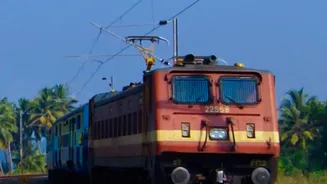
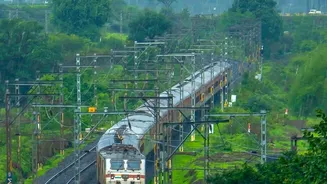
A key reason for the new capacity is a massive infrastructure overall. Indian Railways has been systematically working on doubling the tracks along the entire corridor. A major part of this is the Pune-Miraj-Londa line doubling project, a 467-km stretch crucial for this route. As of mid-2026, significant portions of this project have been completed and commissioned, with the remaining work progressing rapidly. Doubling the track allows trains to run in both directions simultaneously without stopping for crossings, drastically reducing delays and increasing the line's overall capacity. Furthermore, the route is now fully electrified, allowing for faster, more efficient, and environmentally friendly train operations at speeds up to 130 km/h on most sections.
New Trains, Faster Journeys
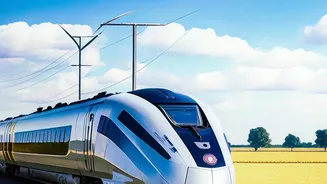
The direct result of these upgrades is the introduction of new and faster train services. In May 2026, a new bi-weekly express train between SMVT Bengaluru and Lokmanya Tilak Terminus in Mumbai was launched, finally providing a second direct option for travellers. More significantly, Indian Railways is set to launch Vande Bharat sleeper trains on this route. These modern, overnight services are expected to slash travel time from around 24 hours to approximately 16 hours, offering a comfortable and time-efficient alternative to flights. These new services are part of a broader national plan to enhance capacity at major urban centres, with both Bengaluru and Mumbai identified as key cities for infrastructure augmentation to meet rising passenger demand.
Connecting Two Economic Powerhouses
Strengthening the rail link between Mumbai and Bengaluru is about more than just passenger convenience; it's a strategic economic decision. The route forms a critical part of the proposed Bengaluru-Mumbai Industrial Corridor (BMIC), an ambitious project designed to boost manufacturing and create millions of jobs. By connecting the nation's financial heart with its premier technology and startup ecosystem, the upgraded railway line facilitates a smoother flow of talent, business, and goods. Improved connectivity between these two high-GDP cities, along with other key hubs like Pune, Belagavi, and Hubballi, is expected to catalyze industrial growth and strengthen economic ties across western and southern India.
What This Means for Travellers
For the average person, these enhancements translate into tangible benefits. The most immediate impact will be a significant reduction in travel time and an increase in the number of available trains. This will likely lead to greater availability of confirmed tickets, a constant struggle on this high-demand route. The introduction of modern Vande Bharat sleeper trains promises a more comfortable and reliable overnight journey. With fares expected to be competitive against air travel, the upgraded rail service will provide a cost-effective and convenient option for millions, ultimately boosting tourism, trade, and social connections between two of India's most dynamic regions.