
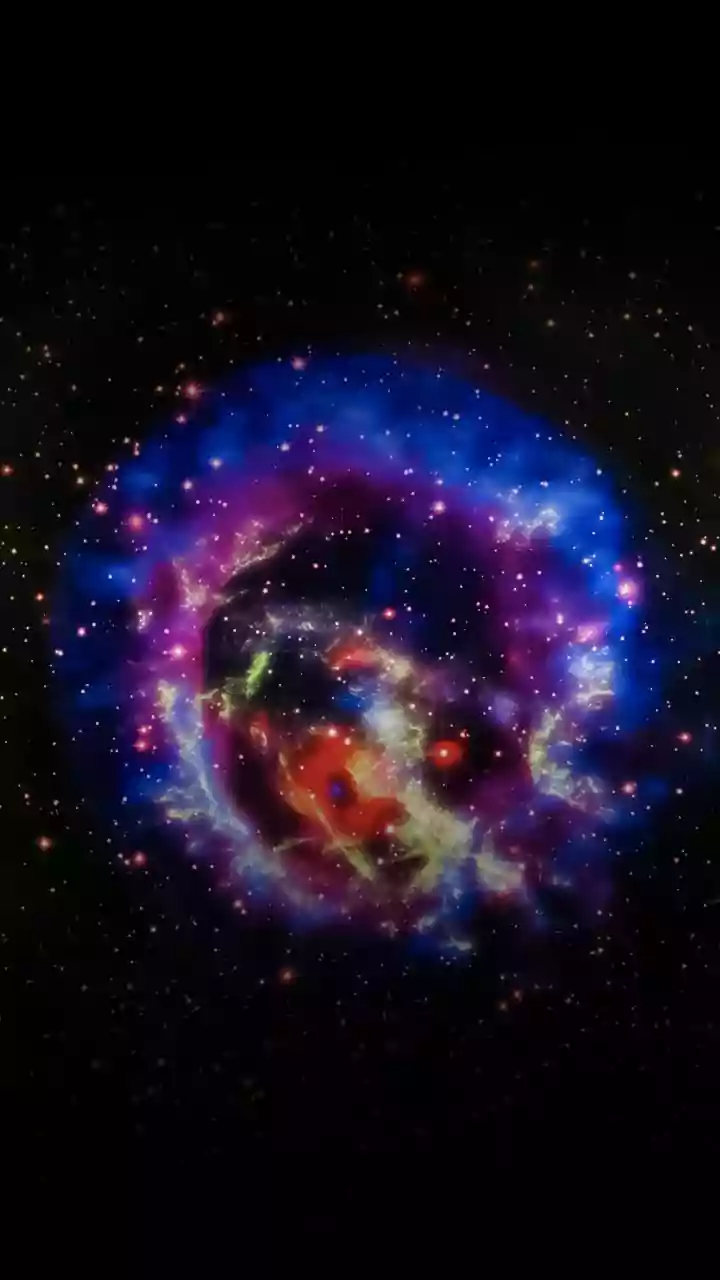
A Cosmic Masquerade
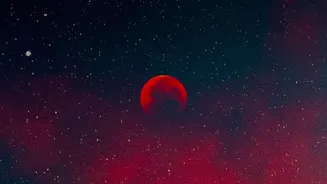
Imagine looking across the vastness of space and spotting what looks like a giant, reddish star. Now, imagine that this 'star' is actually a clever disguise for a voracious supermassive black hole at its centre. This is the stunning possibility raised
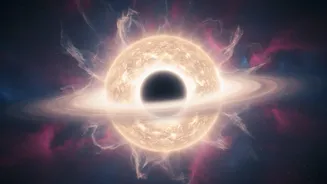
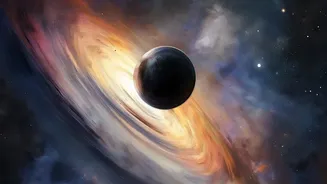
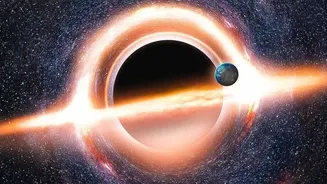
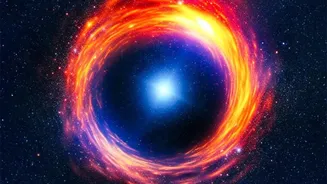
by a recent discovery in the early universe. An international team of scientists, led by researchers from MIT, have identified an object called MoM-BH-1, which existed about 660 million years after the Big Bang. While it appears star-like, its characteristics don't fit any known type of star. Instead, they believe it's a black hole, millions of times the mass of our Sun, wrapped in a dense, system-sized envelope of hydrogen gas. This structure has been nicknamed a 'black hole star'.
Unpacking the Evidence
The clues that gave away this cosmic imposter were hidden in its light. When analysed by the JWST, the object MoM-BH-1 showed an unusual spectral signature. It was extremely red, but not because of dust or old stars, as might be expected. The light signature showed what is called an exceptionally strong 'Balmer break', which indicates the presence of incredibly dense hydrogen gas. The team ran numerous models and found that a normal star couldn't produce this effect. The only model that fit the observations was a central black hole, actively feeding and releasing enormous energy. This energy heats the surrounding hydrogen gas, causing it to glow and absorb certain frequencies of light, which in turn makes the entire object appear as a single, massive, reddish star from billions of light-years away.
Solving a Growth Spurt Mystery
This discovery could solve one of the biggest puzzles in modern cosmology: how did supermassive black holes get so big, so fast? Astronomers have been baffled by the existence of black holes weighing millions or billions of times our Sun's mass in the very early universe, a time when there seemingly wasn't enough time for them to grow so large through conventional means. The 'black hole star' model provides a potential answer. A black hole cocooned in a massive reservoir of its own fuel—the hydrogen gas envelope—could grow at an astonishing rate, far exceeding what was thought possible. The gas shroud traps energy, allowing the black hole to feed continuously and rapidly in its infancy, ballooning to supermassive status in a cosmic blink of an eye.
The 'Little Red Dots' Connection
This finding also sheds light on another recent mystery from the JWST: the appearance of numerous, unexplained 'little red dots' in deep-field images of the early universe. Astronomers have struggled to explain what these compact, reddish objects are. If the model for MoM-BH*-1 is correct, many of these red dots could be other examples of this new class of object—infant supermassive black holes hidden within their gaseous cocoons. This would mean that the early universe was filled with these camouflaged black hole nurseries, which have simply been misidentified until now. The dense gas envelope may also have led astronomers to miscalculate the mass of these early black holes, potentially by a factor of 10 to 100, suggesting they might be more common than previously thought.