









A Solar Storm Unfolds
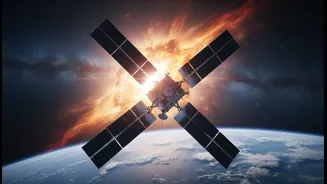
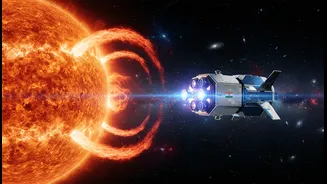
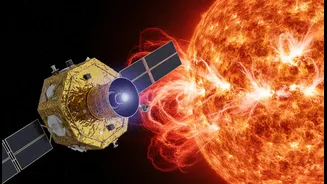
On July 4, 2026, space weather agencies detected a strong solar flare, classified as an X1.3 event, erupting from the Sun. Solar flares are immense explosions on the Sun's surface that release intense bursts of electromagnetic radiation. These events
are ranked by intensity, with X-class flares being the most powerful. This recent flare sent a wave of radiation hurtling through space, prompting alerts for potential impacts on satellites and communication systems. While the associated eruption of solar material, known as a Coronal Mass Ejection (CME), was not believed to be directly aimed at Earth, the radiation itself poses a risk to any spacecraft in its path.
India's Eye on the Sun
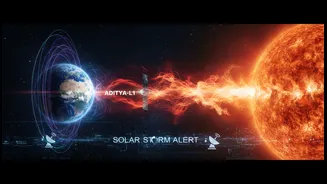
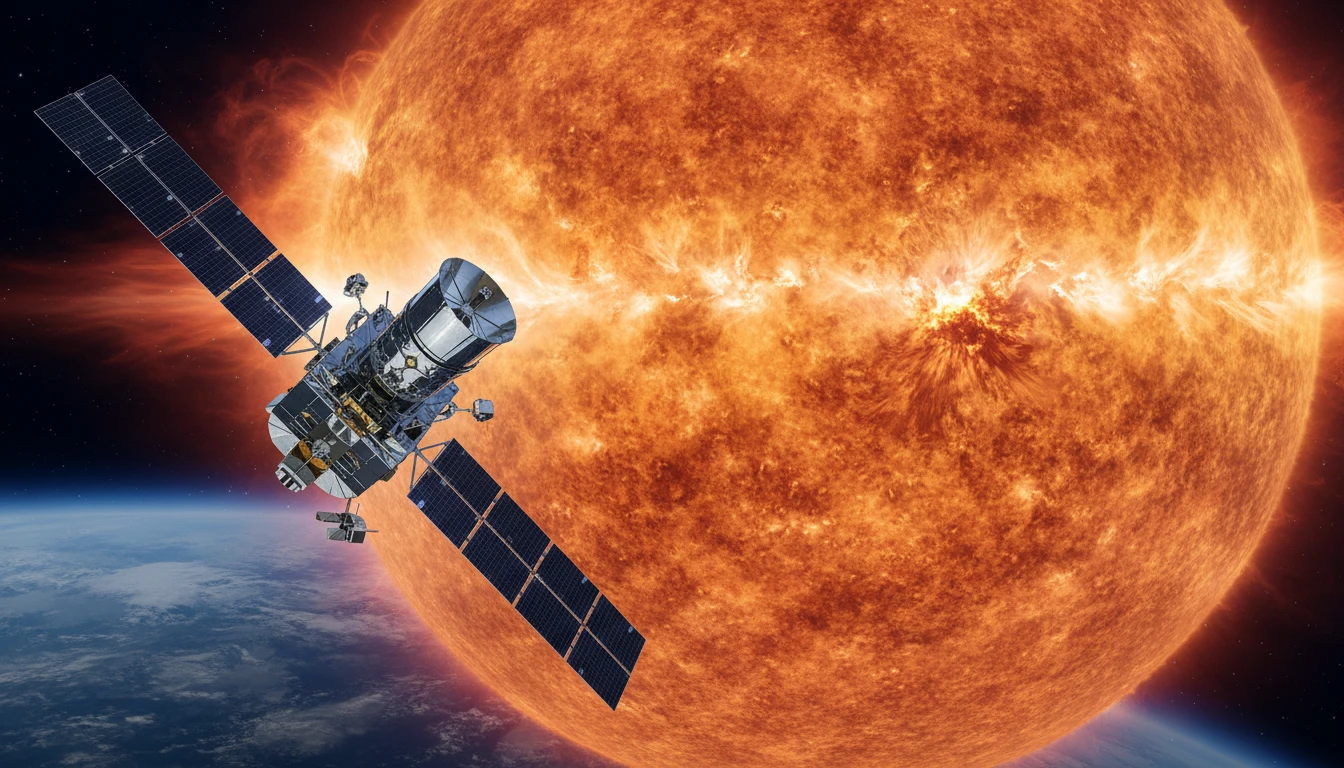
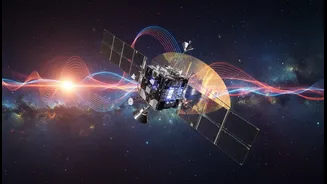
The headline's mention of "Drishti," which means "vision" in Sanskrit, likely refers symbolically to the mission of ISRO's Aditya-L1 spacecraft, India's first dedicated solar observatory. Positioned 1.5 million kilometres from Earth at a stable location called Lagrange point 1, Aditya-L1 has a continuous, uninterrupted view of the Sun. Its mission is to study solar phenomena like flares and CMEs to better understand and predict space weather. The irony is that the very spacecraft designed to watch the Sun's every move is also one of the most exposed to its violent outbursts. ISRO continuously monitors its fleet of over 50 satellites, and Aditya-L1 is a top priority during any major solar event.
How Radiation Threatens Satellites
Solar radiation events pose a clear and present danger to the sophisticated electronics that form the backbone of any satellite. When energetic particles from the Sun strike a spacecraft, they can cause a range of problems. These can be temporary glitches, such as flipping a memory bit in a computer, which can lead to software errors—an event known as a single event upset. More severe impacts can include permanent damage to components like microprocessors and sensors, degrading their performance over time. In the worst-case scenario, a powerful surge of radiation can cause short circuits, leading to critical system failures. Protective shielding and redundant systems are built into satellites like Aditya-L1 to mitigate these risks, but an exceptionally strong event can still overwhelm these defenses.
ISRO on Watchful Alert
Following the recent solar flare, ISRO's telemetry and command network (ISTRAC) would have placed its assets on high alert. While there has been no official confirmation of damage to any specific system, a period of intense monitoring and diagnostics is standard procedure. Engineers will be meticulously checking the health and performance of all subsystems on Aditya-L1 and other key satellites. This involves analysing telemetry data for any anomalies in power levels, component temperatures, or data transmission. In the past, ISRO has successfully navigated its spacecraft through major solar storms, with Aditya-L1 itself capturing valuable data during such events. Contingency plans are in place to troubleshoot any issues that arise, but for now, it is a waiting game as experts assess the full impact of the Sun's latest fury.