







The Allure of a Natural Cure
The idea that a natural food could replace a pharmaceutical drug is incredibly appealing. Headlines and health blogs sometimes highlight preliminary studies, often on animals, suggesting that components in maple syrup might have positive effects on health markers,
including cholesterol. For example, some animal studies have shown that certain compounds in maple syrup could potentially lower cholesterol in mice. This has led to speculation and hope that it could offer similar benefits for humans. The logic seems simple: if it comes from a tree, it must be good for you. This desire for simple, kitchen-based solutions to complex health problems fuels the myth that maple syrup could be a secret weapon against high cholesterol.
Understanding the Glycaemic Profile
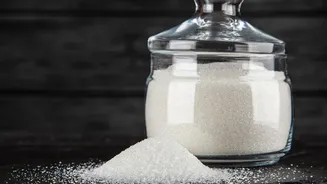
A key part of the conversation revolves around the glycaemic index (GI), a scale that ranks carbohydrates on how quickly they raise blood sugar levels. Pure maple syrup has a glycaemic index of around 54. By comparison, regular table sugar (sucrose) has a GI of about 65. This means maple syrup raises blood sugar more slowly than refined sugar, which is a point in its favour. Foods with a lower GI can be beneficial for blood sugar management. However, a lower GI does not automatically translate to a food being a 'health food' or a medicine. It simply means its sugar is absorbed less rapidly by the body. It is still predominantly sugar—about 67% sucrose by weight—and consuming too much will lead to a significant spike in blood glucose.
The Cholesterol Connection Myth
This is where the central claim falls apart. While some animal studies have hinted at a potential link, there is no robust scientific evidence in humans to support the idea of using maple syrup as a treatment for high cholesterol. Health benefits observed in a lab, often using concentrated extracts, do not necessarily translate to real-world effects from dietary consumption. The compounds in maple syrup that show promise, like polyphenols, are present, but you would need to consume an unhealthy amount of the syrup to get a medicinal dose. Some sources claim the manganese in maple syrup may help increase 'good' HDL cholesterol, but relying on a sugar-based product for mineral intake is not recommended by health professionals. Ultimately, substituting a small amount of refined sugar with maple syrup might offer minor benefits, but it is not a therapeutic agent for managing cholesterol.
So, Is It Actually Healthy?
Compared to table sugar, which provides 'empty calories' with no nutritional benefits, pure maple syrup does have an edge. It contains naturally occurring minerals and antioxidants. Notably, it is an excellent source of manganese, providing a significant portion of your daily needs in just a couple of tablespoons, and also contains zinc, calcium, potassium, and riboflavin. Maple syrup is also rich in polyphenols, which are plant compounds with antioxidant and anti-inflammatory properties. One of these, named Quebecol, is unique to maple syrup and forms during the boiling process. These nutrients are the basis for its reputation as a 'better' sugar. However, it's crucial to maintain perspective: maple syrup is still a high-sugar, high-calorie food that should be consumed in moderation.
Maple Syrup vs. Other Sweeteners
When placed alongside other common sweeteners, maple syrup holds its own. It has a lower glycaemic index than both table sugar (GI 65) and honey (GI ~58). It also contains fewer calories and carbohydrates than honey and agave nectar per tablespoon. Unlike highly processed high-fructose corn syrup or artificial syrups, pure maple syrup is a whole food with no additives. It offers more minerals and antioxidants than almost any other common sweetener. This makes it a superior choice when you are going to use an added sugar anyway. The key is to see it as a substitution for a less nutritious option, not as a health supplement to be added freely to your diet.