




The Familiar Problem of Packed Peaks
For generations of Indians, the annual escape to the hills has been a cherished ritual. Yet, in recent years, this idyllic getaway has often been replaced by the very thing people are trying to escape: crowds, noise, and pollution. Popular hill stations
are creaking under the strain of 'overtourism', a phenomenon that sees destinations overwhelmed by visitors, leading to saturated infrastructure, environmental degradation, and a diminished experience for everyone involved. The dream of serene mountain air is too often a reality of bumper-to-bumper traffic and overflowing hotels. This has created a pressing need for alternatives that can offer genuine escape while also distributing tourist footfalls and revenue more evenly across the country, moving travellers beyond the handful of overburdened towns.
Looking Up for an Answer: What Is Astrotourism?
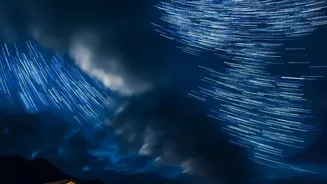
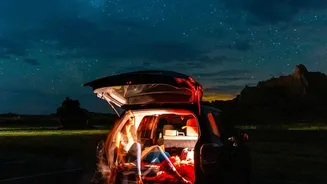
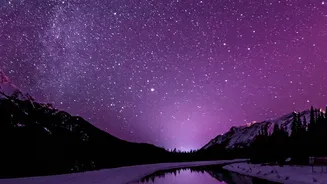
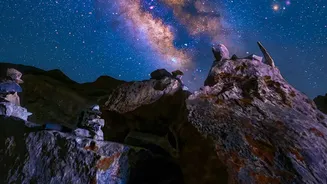
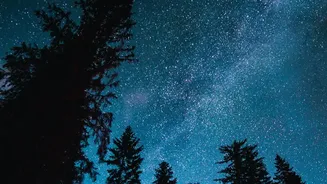
The most promising alternative might just be above our heads. Astrotourism, or 'dark-sky tourism', is travel for the specific purpose of stargazing. It involves seeking out remote locations with minimal artificial light pollution to experience the night sky in its full, breathtaking glory. As our cities and towns grow brighter, the natural darkness of the night is becoming a rare and valuable resource. An estimated 80% of the world's population lives under a light-polluted sky, unable to see the Milky Way. Dark-sky tourism offers a chance to reconnect with the cosmos, a sight that was commonplace for our ancestors but is a novelty for many today. These destinations are often found in remote, ecologically sensitive areas, making the practice of preserving dark skies a powerful tool for both conservation and sustainable economic development.
India's Pioneer: The Hanle Dark Sky Reserve
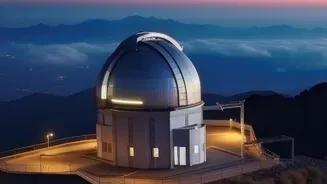
India has already taken a major step into this new frontier of travel. In 2022, a region in Ladakh around the village of Hanle was designated as India's first official Dark Sky Reserve. Located at a high altitude in the cold, dry desert of the Changthang Plateau, Hanle offers some of the clearest, most pristine night skies in the world. The reserve was established through a collaboration between scientists, the local administration, and the community to protect the area from light pollution, safeguarding its value for both astronomical research at the Indian Astronomical Observatory and for tourism. The results have been staggering. Before the designation, Hanle saw a few thousand visitors annually; that number has since surged, bringing vital income to local communities through homestays and guided stargazing tours. This model proves that tourism can be a force for good, creating livelihoods while incentivising the protection of a unique natural asset.
Beyond the Big Dipper: Economic and Social Gains
The benefits of developing dark-sky destinations extend far beyond just a beautiful view. For remote communities, astrotourism offers a sustainable source of income that is rooted in their local environment. Unlike mass tourism, which often requires large-scale infrastructure, astrotourism can be built around small, community-led enterprises like homestays, local guides, and handicraft sales. Because it requires an overnight stay, it generates more revenue per visitor than day-tripping. This form of tourism also helps to diversify local economies, providing new opportunities, especially for women and youth, and reducing reliance on traditional livelihoods that may be vulnerable to climate change. By placing value on the natural darkness, communities are empowered to become stewards of their environment, protecting local biodiversity that is also threatened by artificial light.
The Road to More Starry Sanctuaries
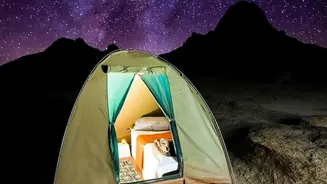
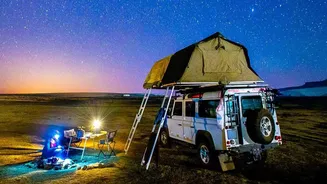
While Hanle is the pioneer, India has immense potential for more dark-sky locations. Regions like Spiti Valley in Himachal Pradesh, parts of Uttarakhand, the Rann of Kutch in Gujarat, and even Coorg in Karnataka have skies dark enough to be developed for astrotourism. Realising this potential requires a concerted effort. It involves creating awareness about the problem of light pollution, implementing responsible lighting policies, and training local communities to become guides and entrepreneurs. Several organisations and even state governments are beginning to recognise this opportunity, with initiatives underway to identify and protect more dark-sky areas. For travellers, the choice is becoming clearer. The next holiday doesn't have to be a compromise. Instead of joining the queue at a crowded viewpoint, you could be standing in the quiet of the Himalayas or a desert, looking up at a sky filled with more stars than you ever thought possible.