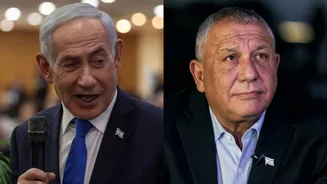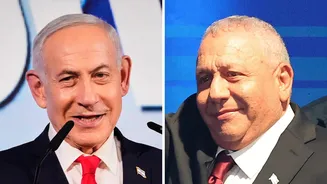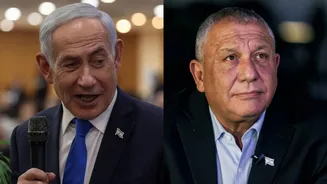








Israel finds itself in a familiar state of political deadlock following the latest election. Prime Minister Benjamin Netanyahu’s right-wing bloc emerged as the largest force but fell just short of the crucial majority needed to form a government.
The Final Tally
After
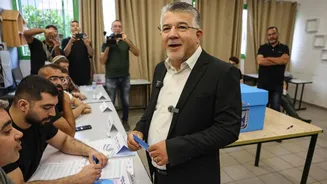
the votes from the October 27 election were certified, the results painted a picture of a deeply divided nation. Benjamin Netanyahu's Likud party and its allies—a coalition of right-wing and religious parties—secured 53 seats in the 120-member Knesset. This leaves them eight seats shy of the 61 required for an outright majority. The main opposition bloc, a diverse group of parties led by former military chief Gadi Eisenkot, garnered 48 seats. The remaining 19 seats were won by Arab-led parties, which saw a historic turnout and now find themselves in a powerful position as potential kingmakers. The high voter turnout, at nearly 78%, underscored the election's significance as a referendum on Netanyahu's leadership and the country's direction.
The Scramble for Partners
With no clear winner, the frantic process of coalition building has begun. For Netanyahu, the path to remaining prime minister is narrow and fraught with challenges. He must persuade a party from outside his bloc to join his government. However, most leaders in the opposition bloc, including Gadi Eisenkot, Naftali Bennett, and Avigdor Liberman, have publicly ruled out sitting in a government led by Netanyahu, citing deep personal and ideological differences. This leaves Netanyahu with few options, forcing him to either attempt to peel off defectors or hope for a change of heart from his staunchest rivals. His far-right coalition partners, such as Itamar Ben-Gvir's Otzma Yehudit and Bezalel Smotrich's Religious Zionism party, have pledged their support, but their extremist positions make it difficult to attract more moderate partners.
Opposition Unites, But Faces Hurdles
On the other side of the aisle, the opposition is moving to consolidate its power. Leaders of the main anti-Netanyahu parties, including Gadi Eisenkot, Naftali Bennett, Yair Lapid, and Avigdor Liberman, have met and agreed to back Eisenkot as their candidate for prime minister. Their declared goal is to form a 'national emergency government' as swiftly as possible. However, their alliance holds only 48 seats, meaning they cannot form a majority without support from the Arab-led parties. This presents a major dilemma. While some in the opposition are open to the idea, others, particularly on the right-wing of the bloc, have historically refused to rely on Arab parties for a governing majority, creating a significant internal obstacle to unseating Netanyahu.
The Arab Parties as Kingmakers
The unprecedented 19 seats won by the Joint List and Ra'am parties have fundamentally altered Israel's political calculus. Leaders of these parties have expressed a readiness to join forces with the opposition to oust Netanyahu, whose government they blame for discriminatory policies and neglect. This could involve supporting a minority government from the outside or even joining a coalition, a move that was once considered politically taboo. The opposition's willingness to engage in such a partnership will be the critical test in the coming weeks. For many Palestinian citizens of Israel, the record turnout was a clear message demanding change and an end to political marginalization.
Implications for the Region and India
The political instability in Israel has wider regional implications. A government heavily reliant on far-right parties could pursue more hardline policies regarding West Bank settlements and relations with the Palestinians, potentially exacerbating tensions. For India, which enjoys a strong strategic partnership with Israel, a stable government in Jerusalem is preferable for longterm cooperation in defence, technology, and trade. While the broad consensus in Israel supporting ties with India means the relationship is unlikely to be dramatically altered, the political uncertainty could delay new initiatives. The composition of the next government will also be closely watched by the United States and Arab nations, as it will shape Israel's approach to Iran and the broader quest for regional stability.