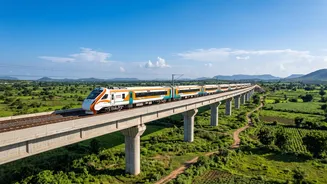





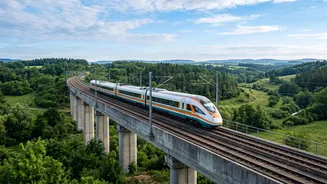
What Are the New 'Fast Trains'?
In a major boost for daily commuters, the NCRTC has launched eight new limited-stop services on the Delhi-Ghaziabad-Meerut RRTS corridor. These aren't additional physical trains but rather new, faster trips scheduled during peak hours. Unlike the regular
services that halt at every station, these fast trains will only stop at five key stations: Sarai Kale Khan, Anand Vihar, Ghaziabad, Begumpul, and Modipuram. This initiative is specifically designed to slash travel time for office-goers and students during the busiest times of the day. By skipping intermediate stations, these services make the end-to-end journey significantly quicker, transforming the daily travel experience for many. Commuters have been advised to check station display boards and listen for announcements to distinguish between the fast and regular services.
Revised Timings for a Quicker Commute
The new fast services are strategically timed for morning and evening peak hours. From both the Sarai Kale Khan and Modipuram terminal stations, two fast trains will depart at 8:00 AM and 8:30 AM. Similarly, in the evening, two services will leave from each terminal at 6:00 PM and 6:30 PM. These eight trips run in addition to the regular Namo Bharat services, which continue to operate at a frequency of approximately every 10 minutes. This blended schedule provides passengers with a choice: a standard all-stops service or a faster, limited-stop option during the times they need it most, without affecting the existing timetable.
How Much Time Will You Save?
The time savings are substantial. The entire 82-kilometre journey between Sarai Kale Khan and Modipuram on these fast trains can be completed in less than 50 minutes. The trip between Anand Vihar and Ghaziabad is now a mere eight minutes. Other key stretches also see significant reductions; the journey from Anand Vihar to Begumpul will take about 36 minutes, while the stretch from Ghaziabad to Begumpul can be covered in 28 minutes. This makes the Namo Bharat service an even more competitive alternative to road travel, which can often take up to three hours during peak traffic.
Responding to Growing Demand
The introduction of these services is a direct response to the rapidly growing ridership on India's first RRTS corridor. The route now serves around 110,000 passengers daily, and the network has recorded over five crore passenger journeys in total. In recent months, the corridor saw an average monthly ridership of more than 32 lakh, indicating a strong public embrace of this modern transit system. Earlier in the year, NCRTC had already increased the number of trips to ease overcrowding as passenger numbers swelled, demonstrating the system's flexibility in adapting to commuter needs. The infrastructure is built to handle even higher demand, with the potential to increase frequency to every three minutes if required in the future.
The Bigger Picture for Regional Connectivity
This service enhancement is another milestone for the fully operational Delhi-Ghaziabad-Meerut RRTS corridor, which opened in its entirety in February 2026. The Namo Bharat trains, with a design speed of 160 km/h, are redefining regional travel in the NCR. The corridor's success is also built on its excellent multimodal integration. Major stations like Sarai Kale Khan, Anand Vihar, and Ghaziabad are seamlessly connected with the Delhi Metro, Indian Railways stations, and Inter-State Bus Terminals (ISBTs), making first and last-mile connectivity a breeze for commuters. This integrated approach is a key reason why stations with such links account for nearly 40% of the corridor's total ridership.