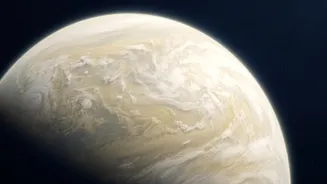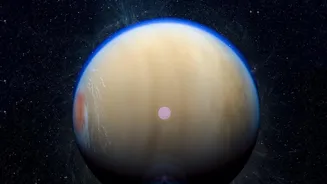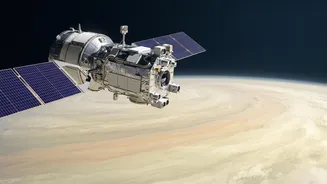




Our Hellish Neighbour, Reimagined
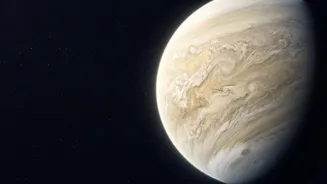
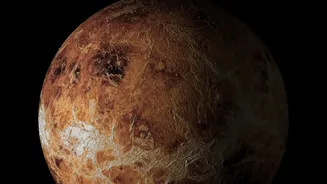
For decades, Venus has been largely written off in the search for extraterrestrial life. Its surface, at a blistering 462 degrees Celsius, is hot enough to melt lead, and the atmospheric pressure is over 90 times that of Earth's. However, scientists have
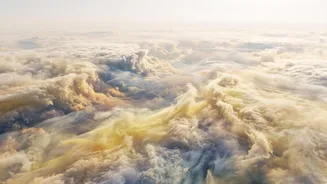
long speculated about a tantalizing possibility in the upper atmosphere. Between 48 and 60 kilometres high, temperatures and pressures are surprisingly Earth-like. The catch? This temperate zone is located within clouds made of 98% concentrated sulfuric acid, an environment believed to be universally hostile to the complex molecules that form the basis of life. This long-held assumption is now being challenged by groundbreaking laboratory experiments.
Chemistry in the Clouds
The focus of the new research is prebiotic chemistry—the study of the chemical building blocks that precede life itself. These are molecules like amino acids, which link up to form proteins. A recent study from researchers at MIT has shown that these fundamental molecules are far tougher than previously thought. In experiments simulating the Venusian cloud environment, scientists were stunned to find that peptides—short chains of amino acids—did not just survive in concentrated sulfuric acid, but remained stable for weeks. This upends the idea that the planet's acid clouds would instantly shred any organic material that found its way there, perhaps delivered by meteorites.
More Than Just Survival
What makes the MIT findings particularly exciting is that the peptides didn't just endure the harsh conditions; they folded into stable, three-dimensional structures. In biology, a molecule's shape determines its function. The ability to fold is a critical prerequisite for these molecules to perform complex tasks, which is the foundation of biological activity. The researchers believe this unexpected stability is due to the extreme lack of water in concentrated sulfuric acid. On Earth, water is essential for life, but it also helps break down peptide bonds through a process called hydrolysis. In the nearly water-free environment of the acid, this destructive reaction becomes far less effective, paradoxically preserving the very molecules needed for life.
The Phosphine Puzzle
This new research adds another layer to an ongoing debate that was reignited in 2020 with the controversial detection of phosphine in Venus's atmosphere. On Earth, phosphine is a gas strongly associated with anaerobic life (organisms that don't require oxygen). While the initial detection was heavily debated, subsequent observations have continued to find a candidate signal, making it harder to dismiss entirely. Although the presence of phosphine is not proof of life, no known non-biological process on Venus can easily explain the amounts claimed. The discovery that peptides can survive in the same environment adds weight to the argument that the chemistry of the Venusian clouds is more complex and potentially more interesting than we ever imagined.
Not Life, But a Pathway
It is crucial to be clear: scientists have not found life on Venus. These are laboratory experiments, not direct detections of organisms. What this research does is remove a major barrier, showing that a planet's chemistry doesn't have to be Earth-like to support complex molecules. It broadens the definition of a potentially habitable environment, suggesting scientists may need to look beyond planets with liquid water. The findings open the door to considering that a different kind of biology, one based in sulfuric acid instead of water, might be possible. The next step is to test whether longer, more complex molecules like peptide nucleic acid (a synthetic analogue to DNA) can also remain stable and form structures.