
A Plane's Balancing Act
To understand why the back of the plane often feels the bumpiest, you first need to understand how an aircraft is balanced. Every plane has a 'centre of gravity' (CG), which is the average location of its weight. For design and stability reasons, this
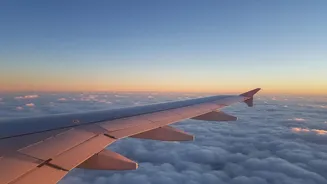
point is almost always located near the middle of the aircraft, right around where the wings attach to the fuselage. Pilots and airlines carefully manage the loading of passengers, cargo, and fuel to ensure the CG stays within a safe, predetermined range. This balancing point acts as a pivot around which the entire aircraft moves. Think of it as the fulcrum of a seesaw.
The Seesaw in the Sky
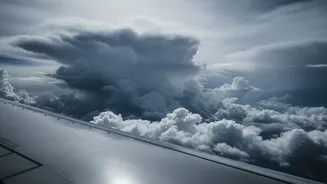
The seesaw analogy is the easiest way to picture what happens during turbulence. When you sit on a seesaw, the people at the very ends move up and down the most, while the person or point in the middle (the pivot) moves the least. An airplane behaves in a very similar way when it encounters unsettled air. The seats located over the wings are closest to the centre of gravity. When the plane hits a bump and pitches up or down, these seats experience the least amount of vertical movement. However, the further you move from this pivot point towards the nose or, more significantly, the tail, the more amplified that movement becomes. A passenger in the last row might feel two to three times the vertical motion of someone sitting over the wing.
More Than Just Up and Down
The sensation of turbulence isn't just about vertical bumps. Aircraft can also move side-to-side in a motion called 'yaw'. This is the 'fishtailing' feeling that can be particularly unsettling. The vertical stabiliser, or tail fin, is designed to counteract this yawing motion and keep the plane flying straight. Because the tail is doing this corrective work and is the furthest part of the aircraft from the centre of gravity, any side-to-side movements caused by wind gusts are felt most acutely at the very back. Add the noise from the wind over the control surfaces and the flexing of the fuselage, and it's easy to see why the back rows provide a more intense sensory experience during a bumpy ride.
So, Where Is the Smoothest Ride?
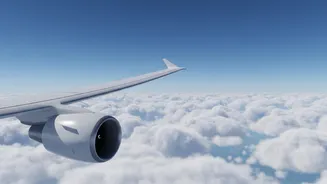
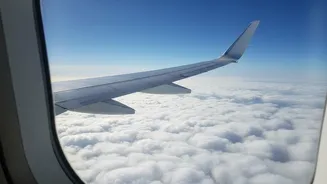
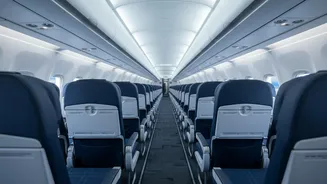
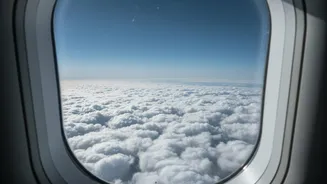
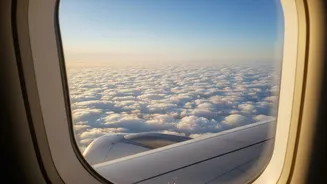
If your primary goal is to avoid the worst of the bumps, the science is clear: book a seat over the wings. This area is the most stable and will offer the smoothest journey through light or moderate turbulence. The front of the cabin is generally the second-best option. While it does experience some movement, it's typically less pronounced than the amplified motions at the rear. Some frequent flyers also note that larger, wide-body aircraft can feel more stable in turbulence than smaller, narrow-body jets, simply due to their increased mass and advanced wing designs. A window seat can also help, as having a view of the horizon can reduce the feeling of motion sickness for some people.
A Matter of Comfort, Not Safety
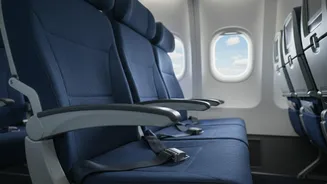
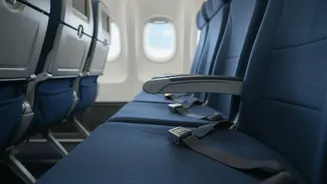
It's crucial to remember that while the feeling of turbulence varies throughout the cabin, this has no bearing on the safety of the aircraft. Modern commercial aeroplanes are engineered to withstand forces far greater than any turbulence they would ever encounter. The wings are designed to be flexible, and the entire structure is stress-tested for extreme conditions. Pilots are also highly trained to manage turbulence; they use weather radar to avoid the worst areas and may change altitude to find a smoother layer of air. The 'fasten seatbelt' sign is your most important safety tool, as it prevents injuries that could occur from being thrown around the cabin during a sudden jolt. So, while the ride in the back might be a bit more lively, the entire plane is equally safe.