



A Quantum Leap in Journey Time
The most significant promise of the Delhi-Varanasi high-speed rail corridor is a dramatic reduction in travel time. The journey, which currently takes between 8 to 12 hours on the fastest trains like the Vande Bharat Express, is projected to be slashed
to approximately 3 hours and 50 minutes. This remarkable speed, with trains operating at up to 320 km/h, would make day trips feasible and position rail travel as a serious competitor to airlines, especially when factoring in airport check-in and travel times. For instance, the Delhi to Lucknow stretch could be covered in just about two hours.
Mapping the High-Speed Route
The proposed corridor spans approximately 865 kilometres, connecting Delhi to Varanasi through a network of 12 stations. The planned route is designed to integrate key urban, economic, and religious centres across Uttar Pradesh. Starting from Sarai Kale Khan in Delhi, the line will pass through Noida, Jewar (connecting to the new international airport), Mathura, Agra, New Etawah, South Kannauj, Lucknow, Raibareli, Prayagraj, and New Bhadoi before terminating in Varanasi. This alignment ensures that major hubs of commerce, pilgrimage, and tourism are brought onto the high-speed network.
Answering Your Key Planning Questions
As one of seven new high-speed corridors announced in the Union Budget 2026-27, the Delhi-Varanasi line is a major infrastructure priority. However, it is crucial for travellers to understand its current status. The project is in the advanced planning or 'pre-construction' phase. The National High Speed Rail Corporation Limited (NHSRCL) has submitted the Detailed Project Report (DPR) to the Railway Ministry, but construction has not yet been sanctioned. Therefore, there is no official opening date, though some reports suggest an indicative timeline targeting completion around 2031. Cost is another major question. While not yet finalised, feasibility studies have pegged the fare at roughly 1.5 times that of a first-class AC ticket on current trains, with a base fare of around Rs 4.5 per kilometre. This could translate to an estimated fare of Rs 3,240 for a Delhi-Varanasi ticket and Rs 1,980 for Delhi-Lucknow.
The Technology Behind the Speed
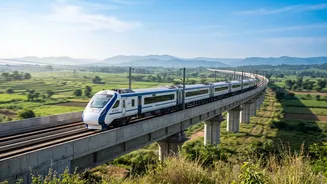
The corridor is being designed to handle trains with a maximum speed of 350 km/h. This will involve building a new, dedicated track on a standard gauge system, often elevated or running parallel to existing highways to minimise sharp curves and allow for sustained high speeds. The project is also a testbed for technology and construction methods new to Indian Railways. While India's first high-speed corridor (Mumbai-Ahmedabad) has relied heavily on Japanese Shinkansen technology, there is a push towards developing indigenous high-speed trains. BEML is reportedly manufacturing prototypes expected to be ready for testing in 2027.
The Bigger Picture: Economic and Cultural Impact
Beyond just faster travel, the Delhi-Varanasi corridor is envisioned as a 'growth connector'. By linking industrial and political centres with religious and tourist destinations like Mathura, Agra, Prayagraj, and Varanasi, the project is expected to deliver a significant economic boost. Officials believe that the reduced travel times will essentially merge the economic zones of cities like Varanasi, Lucknow, and Patna, fostering greater business integration and regional development. The seamless connection to the upcoming Noida International Airport at Jewar is also a strategic move, creating an integrated air-rail hub that could transform logistics and passenger movement across northern India.