




A Sweet Menu for the Stars
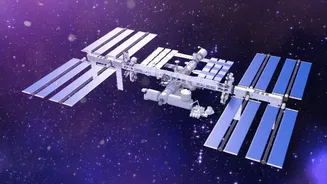
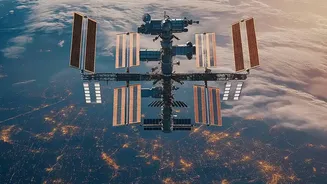
When Indian Air Force Group Captain Shubhanshu Shukla launched towards the International Space Station (ISS) on the private Axiom-4 (Ax-4) mission in 2025, he carried more than just scientific equipment. Tucked away for his journey were specially prepared
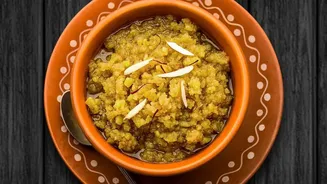
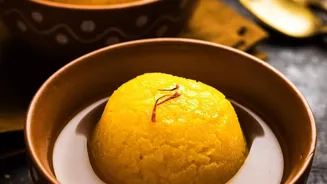
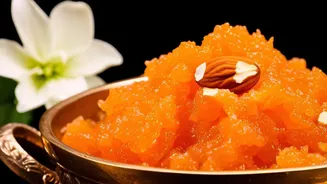
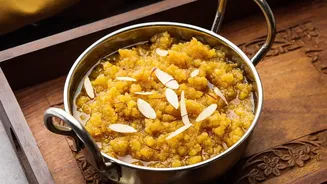
packages of Moong Dal Halwa, Gajar Ka Halwa, and Aamras, or mango pulp. As the second Indian to ever travel to space and the first to visit the ISS, Shukla’s mission was historic, and his food selection brought a uniquely Indian flavour to the final frontier, offering a comforting connection to home amidst the vastness of space. The sweets were not just for him; they were shared with his multinational crewmates, introducing them to the rich tastes of Indian celebratory cuisine.
The Science of Space-Ready Halwa
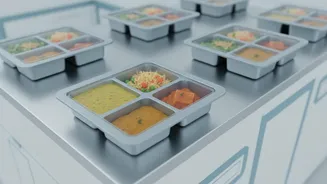
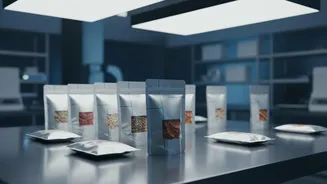
Sending food to space is far more complex than simply packing leftovers. Every item must meet stringent safety and practical standards set by space agencies like NASA. The primary challenge is microgravity. Crumbs can float away and damage sensitive equipment, while oily residues can create a mess. Food must also have a long shelf life—often over a year—without refrigeration and remain nutritionally sound. To achieve this, the Mysuru-based Defence Food Research Laboratory (DFRL), in collaboration with DRDO and ISRO, re-engineered the classic recipes. The halwas and aamras were made with less oil and modified to prevent crumbling. They were then preserved using advanced techniques like thermal processing before being sealed in sterile, multi-layered pouches, ensuring they were perfectly safe and delicious for consumption in orbit.
A Legacy of Culinary Innovation
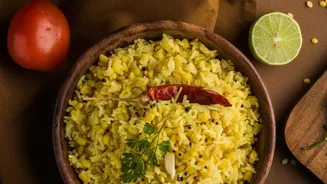
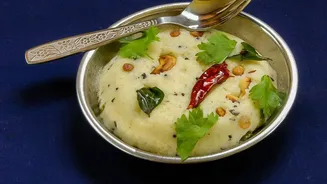
This isn't the first time an Indian astronaut has taken familiar food to space. In 1984, Rakesh Sharma’s menu also featured items prepared by the very same Defence Food Research Laboratory. His meals included suji halwa, aloo chole, and vegetable pulav, establishing a legacy that Shukla's mission continued. For Ax-4, DFRL initially developed a wider menu, including savoury dishes like khichdi and pulao. However, due to the rigorous and time-consuming certification process, only the three sweet dishes were approved in time for the launch. This highlights the immense technical effort required to flight-certify even a single food item. Interestingly, in a post-mission interview, Shukla revealed his crewmates loved the Indian sweets so much that they finished them all, leaving him craving salty snacks instead.
More Than a Meal: A Symbol of Ambition
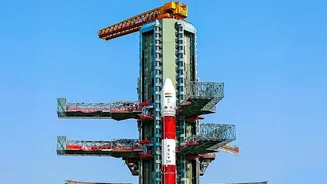
The inclusion of Indian food on an international space mission is more than a novelty; it’s a reflection of India’s growing ambitions in space exploration. These food items were originally developed as part of the menu for India’s own upcoming human spaceflight mission, Gaganyaan. The Ax-4 mission served as a perfect test bed. Beyond the halwa, Shukla conducted several other critical experiments for ISRO, including studies on how microgravity affects the sprouting of moong and fenugreek seeds for potential space farming, and the behaviour of oxygen-producing cyanobacteria. These experiments are crucial for developing self-sustaining life support systems for long-duration missions, proving that India’s focus is firmly on the future of space travel.