







What is the Main Development?
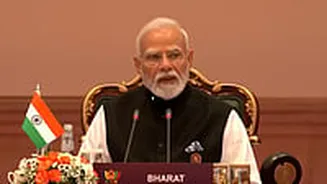
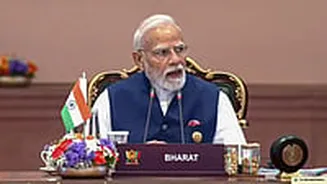
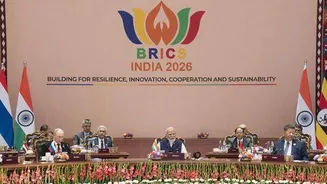
The primary development emerging from the BRICS summit in New Delhi is not a single event, but a suite of major initiatives aimed at deepening economic and technological integration among its expanded membership. Under India's 2026 chairship, the bloc
is moving forward on several key fronts: advancing a framework for cross-border payments using national currencies, establishing a new investment platform, and launching a series of technology-sharing networks. These initiatives represent a concerted push to translate the group's political ambitions into tangible economic mechanisms that can function independently of Western-led systems. Key proposals include linking the digital payment systems of member nations, like India's UPI, and even exploring the connection of Central Bank Digital Currencies (CBDCs) in the future.
A Push for Deeper Tech Cooperation
A standout feature of India's presidency is a strong emphasis on technology. The agenda includes creating a BRICS Network on Digital Agriculture, which will use AI and IoT to boost farm productivity. Another significant move is the adoption of principles for cooperation on smart grids and energy storage. These efforts are designed to build resilience and foster innovation across the member states. Furthermore, initiatives like a BRICS Startup Innovation Hub, an incubator network, and a shared Science and Research Repository aim to create an ecosystem for cross-border collaboration among entrepreneurs and researchers, moving the group beyond purely geopolitical discussions.
Why Is This Happening Now?
These developments are driven by a long-standing goal within BRICS to create a more 'multipolar' world order, where economic and political influence is more distributed. The recent expansion of the group—which now includes Egypt, Ethiopia, Iran, and the UAE, among others—has given this ambition fresh momentum. The expanded bloc now represents nearly half the world's population and around 40% of global GDP. There's a shared desire among members to reduce their reliance on the US dollar for international trade and insulate their economies from the impact of Western sanctions. By building their own financial and technological infrastructure, from payment systems to investment platforms, the member nations aim to enhance their strategic autonomy.
India's Strategic Balancing Act
For India, hosting the summit and driving these initiatives is a delicate balancing act. As a founding member, India is committed to the BRICS goal of championing the Global South. However, it must also manage its strategic partnerships with Western countries, particularly the United States, within forums like the Quad. India is carefully steering the BRICS agenda towards cooperation, development, and institutional reform, rather than direct geopolitical confrontation. By leading initiatives in digital public infrastructure, where its own UPI model is a notable success, India can shape the bloc's direction in a way that aligns with its strengths and promotes a more inclusive, rather than oppositional, global framework.
What Are the Challenges Ahead?
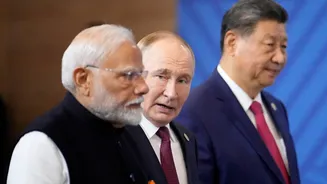
Despite the ambitious agenda, BRICS faces significant hurdles. The expanded group is politically diverse, with members that have divergent interests and, in some cases, rivalries. For instance, India's cautious warming of ties with China, highlighted by President Xi Jinping's first visit in seven years for the summit, must be managed alongside persistent border disputes. Similarly, global events, such as the wars in Ukraine and Iran, create complex fault lines within the group. Successfully implementing far-reaching projects like integrated payment systems will require immense political will and technical coordination among all member states, a task that remains a significant challenge. The ultimate success of these new developments will depend on the bloc's ability to maintain consensus and navigate both internal and external pressures.