





The New Digital Crutch
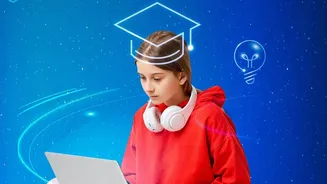
When students turn to AI for every question, they may be engaging in 'cognitive offloading'—outsourcing their thinking to a machine. This growing dependence goes beyond simply using a tool; it's about an over-reliance that risks weakening crucial skills.
Psychologists are increasingly concerned that this could interfere with healthy cognitive and social development. Studies show that while AI can boost short-term performance, it may hinder long-term knowledge retention and critical thinking. The ease of getting a 'perfect' answer from a chatbot means students may miss the chance to develop patience, perseverance, and problem-solving abilities on their own. This isn't just about academic laziness; it's a potential atrophy of the mental muscles needed to analyse, synthesise, and evaluate information independently.
Beyond Homework Help
The use of AI extends far beyond academics. A significant number of teens are turning to AI companions for entertainment, emotional support, and advice on personal problems. Some studies indicate that a large percentage of children have used social AI, with some discussing serious issues with a chatbot instead of a person. This can be particularly concerning because AI interactions often lack the friction and complexity of human relationships. AI companions tend to be agreeable and validating, which may lead to young users developing unrealistic expectations about how human relationships work. Experts warn this could reduce opportunities to practice empathy, perspective-taking, and conflict resolution, skills that are essential for healthy social development.
Convenience, Curiosity, and Concern
The pull towards AI is multi-faceted. In India, with its massive student population, AI offers the promise of personalised learning at a scale that was previously impossible. Platforms can adapt lessons to a student's pace and provide 24/7 tutoring support, bridging educational gaps. However, this convenience is also a source of concern. The pressure to get good grades can make the shortcuts offered by AI incredibly tempting. Many educators and parents are caught in a difficult position, wanting to leverage AI as a powerful learning aid while preventing its misuse for plagiarism and cheating, which a majority of teens believe is now a regular occurrence at their school. The challenge lies in harnessing AI's power without letting it undermine the learning process itself.
A Blueprint for Balance
Fostering healthy technology habits is a proactive, not a reactive, process. The goal is not to ban AI, but to teach young people how to use it responsibly. Open communication is the first step. Parents and caregivers should talk to their children about what AI tools they are using and why. It's also crucial to model healthy behaviour by putting devices away during family time and being present. Establishing tech-free zones, like at the dinner table or in bedrooms, and setting device curfews can also help create a necessary balance between online and offline life. The focus should be on connection over control, guiding children to see technology as a tool to be used mindfully, not a crutch to be leaned on constantly.
Rethinking the Classroom
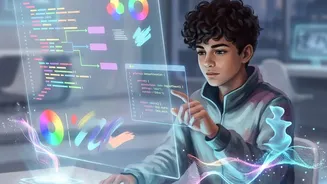
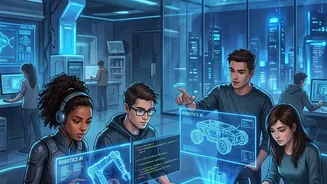
Educators are on the front lines of this technological shift and have a critical role to play. The conversation in schools is moving from whether AI belongs in the classroom to how it should be used. Rather than an outright ban, which is often ineffective, schools can integrate AI literacy into the curriculum. This involves teaching students how to critically evaluate AI-generated content, understand its limitations (like the potential for bias and misinformation), and use it as a brainstorming partner or a research assistant rather than a final-answer machine. The most effective approach treats AI as a supplement to, not a replacement for, human teaching. The ultimate goal is to enhance higher-order thinking, encouraging students to analyse, question, and create, using AI as a starting point for their own intellectual journey.