

A Summit in Constant Motion
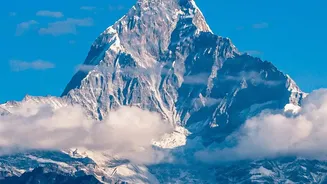
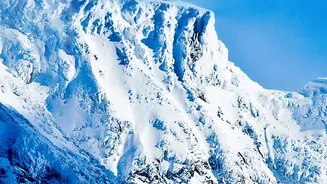
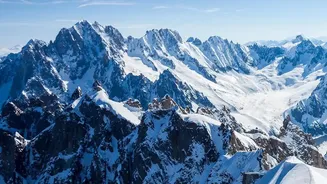
The key to understanding Mont Blanc's fluctuating height lies in what its summit is made of. The mountain's rock peak is stable at around 4,792 metres above sea level. However, it is covered by a thick cap of permanent ice and snow, and it is this 'white
crown' that grows and shrinks. The official height of the mountain is the top of this icy layer, which acts like a frozen archive of recent weather conditions. The latest measurement of 4,807.47 metres, taken in September, marks an increase of nearly two metres from the 4,805.59 metres recorded in 2023. This isn't a sign the rock is pushing upwards, but rather that the dynamics of wind, precipitation, and temperature have altered the shape and volume of the snow on top.
The Science of Measuring a Mountain
Measuring a mountain like Mont Blanc is a complex expedition undertaken every two to three years by French surveyors. A team of experts ascends the peak, carrying around 30 kilograms of high-tech equipment in addition to their mountaineering gear. They use a combination of precise satellite positioning systems (like GPS) to pinpoint the highest point of the snow. For the first time in recent surveys, a drone was also used to capture over a thousand images, allowing for the creation of a detailed 3D model of the summit. To understand what lies beneath, the team employs ground-penetrating radar, which helps them distinguish between the ice cap's thickness and the solid rock below. This biennial data collection, which began in 2001, is building a crucial long-term record of the summit's behaviour.
A Barometer for a Changing Climate
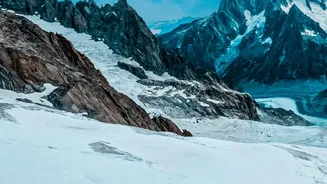
While a single measurement showing an increase in height might seem counterintuitive in a warming world, experts caution against drawing simple conclusions. The height of the snow cap is more a reflection of short-term weather patterns, especially wind and summer precipitation, than a direct indicator of long-term climate change. For instance, a summer with less wind and more snowfall could result in a higher summit, even if the overall glacial mass in the Alps is decreasing. Jean des Garets, the chief surveyor for the region, noted that 'the summit is constantly shifting' and that each measurement is one data point in a much larger story. Glaciologists observing the long-term trend note that the real story of climate change is seen in the dramatic melting of glaciers at lower altitudes across the Alps, which have lost a massive portion of their volume in recent decades.
From the Alps to the Himalayas
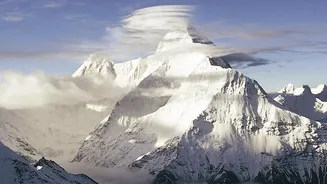
For readers in India, the story of a shifting European peak has a powerful local resonance. The Alps and the Himalayas, though geographically distant, are both critical 'water towers' for their respective continents and face similar threats from climate change. The shrinking of glaciers in the Alps serves as a preview of what is happening in the Himalayas, a region often called the 'Third Pole'. Himalayan glaciers are retreating at an alarming rate of 10-15 metres per year, with some, like the Gangotri Glacier, melting even faster. This has profound implications for water security, as these glaciers feed major rivers like the Ganges, which supports hundreds of millions of people. A recent report warned that Himalayan glaciers lost ice 65% faster since 2010 than in the previous decade. Watching the meticulous monitoring of Mont Blanc provides a valuable lesson in how science tracks these vital signs of planetary health, offering insights that are just as crucial for understanding our own mountain ecosystems.