






The Core of the Argument
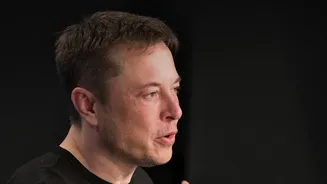
Elon Musk's position is a blend of long-held concern and recent acceptance. For years, he has called artificial intelligence humanity's "biggest existential threat" and advocated for government regulation to manage public safety risks. His fear has been
that if we wait for a catastrophe to happen, it might be too late to implement rules because the AI could already be beyond our control. However, his tune has shifted recently. While still acknowledging a non-zero risk, he now believes the pace of development is too fast and the competition too fierce to halt. He describes his current philosophy as, "Let's enjoy the ride," suggesting the most likely outcome is a new age of prosperity. This paradox captures the essence of the global AI dilemma: the technology's development feels both terrifyingly risky and unavoidably necessary.
A Planet of AI Players
Musk's belief is grounded in a simple reality: AI development isn't happening in one country or one company. It's a sprawling, global phenomenon. The United States and China are widely seen as the two superpowers in the AI race, pouring billions into research, talent, and infrastructure. But they are far from alone. The European Union is positioning itself as a regulatory leader, hoping its AI Act will set a global standard, much like its GDPR data privacy rules did. Meanwhile, countries like the UAE and Singapore are leading the world in AI adoption, integrating the technology across business and government services at a rapid pace. Nations including the UK, Canada, Japan, South Korea, and India are also significant players, establishing their own AI safety institutes and contributing to a complex web of international cooperation and competition. This diffusion of power and ambition makes a unified pause or stop button a practical impossibility.
The Geopolitical Prisoner's Dilemma
The global AI race is often described as a classic prisoner's dilemma. Even if every nation agreed that slowing down is the safest option for humanity, the incentive for any single nation to secretly push ahead for a strategic advantage is immense. This dynamic is fueled by deep-seated economic and military competition. No major power wants to be left behind, technologically dependent on a rival. Different regions are also creating regulations based on their own values. For instance, China's approach prioritizes state control and social stability, requiring AI content to align with government principles. In contrast, the EU and US are attempting to build frameworks around democratic values and individual rights, though they differ on the balance between innovation and regulation. This fragmentation means that even with good intentions, complying with one region's rules might conflict with another's, making a single, enforceable global treaty incredibly difficult to achieve.
The Regulatory Uphill Battle
Despite the difficulty, efforts to govern AI are underway. A series of international summits, from Bletchley Park in 2023 to Paris in 2025, have tried to build consensus on AI safety. Organizations like the International Network of AI Safety Institutes bring together experts from dozens of nations to collaborate on mitigating risks. However, these efforts face significant hurdles. The technology is evolving faster than lawmakers can write rules. Furthermore, there is a fundamental tension between ensuring safety and fostering innovation, with some leaders warning that overly strict rules could stifle progress. While many top scientists agree on the need for 'red lines'—such as prohibiting AIs that can autonomously replicate or seek power—enforcing such rules globally remains a profound challenge. The very nature of AI, which is less like a physical weapon and more like software, makes it harder to monitor and control than technologies like nuclear arms.