









Beyond Fabs: A New Strategic Vision
For years, the global conversation around semiconductors has been dominated by multi-billion dollar fabrication plants, or 'fabs'. While India is aggressively pursuing this goal, with projects like Tata's Dholera fab under construction, the focus for
SEMICON India 2026 is deliberately wider. The theme 'Silicon to Systems' reflects a strategic pivot towards developing the entire value chain. This represents a move from simply attracting investment to creating a self-sustaining, globally competitive, and resilient semiconductor ecosystem within the nation's borders. The event, scheduled for September 17-19 in New Delhi and jointly organised by the India Semiconductor Mission (ISM) and SEMI, will bring together global industry leaders to accelerate this vision.
What 'Building the Ecosystem' Means
The expanded focus acknowledges that a successful semiconductor industry requires more than just manufacturing. It encompasses a complex network of interconnected sectors. This includes Outsourced Semiconductor Assembly and Test (OSAT) and Assembly, Testing, Marking, and Packaging (ATMP) facilities, which are already becoming operational through companies like Micron and CG Power in Gujarat. It also includes crucial upstream and downstream components: chip design, where India already has a significant global talent pool; manufacturing equipment; specialty chemicals and gases; and research and development. The government's new Semicon 2.0 policy framework specifically targets these areas, offering incentives to bolster indigenous capabilities and reduce import reliance.
Key Players and Global Partnerships
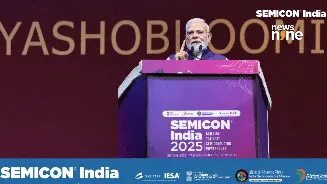
The scale of SEMICON India 2026 underscores the growing global confidence in India's strategy. The event is expected to host over 500 exhibitors and delegations from more than 40 countries, with dedicated pavilions for nations like Japan, South Korea, Germany, and the Netherlands. Prime Minister Narendra Modi is slated to inaugurate the conference and hold a roundtable with global CEOs, highlighting the high-level government backing for the mission. Major international firms like ASML, Applied Materials, Lam Research, and Infineon are expected to participate, alongside domestic champions such as Tata Electronics. This convergence of global expertise and local ambition is seen as essential for India to not just join the global supply chain, but become an integral part of it.
Cultivating Talent and Innovation
A cornerstone of building a sustainable ecosystem is developing a skilled workforce. While India contributes a significant portion of the world's semiconductor design engineers, there is a recognized gap in manufacturing talent. SEMICON India 2026 will feature dedicated sessions on workforce development and skilling to address this. Furthermore, the government's push includes supporting startups and academia. Initiatives like the Design Linked Incentive (DLI) scheme have already approved over 24 startups, and hundreds of academic institutions are being provided with state-of-the-art design tools to foster innovation from the ground up. The goal is to create a continuous pipeline of talent and intellectual property that can fuel the industry's long-term growth.