







Groundwork Done: What Are Gateways?
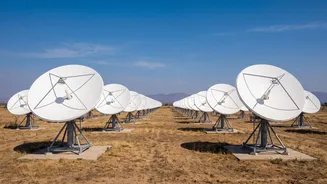
Starlink has confirmed the establishment of 20 gateway sites across India, a crucial step before any commercial rollout. These gateways, also known as ground stations, are the heart of the satellite internet system. They are physical data centers equipped
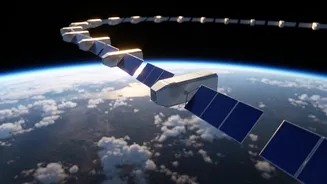
with hundreds of antennas that act as a bridge, connecting the Starlink satellites in low-Earth orbit to the world's existing fiber optic internet backbone. When a user sends a request for data, it travels from their terminal dish to an overhead satellite, which then beams the signal down to the nearest gateway. This gateway routes the traffic to the global internet and sends the data back along the same path. Having numerous, strategically located gateways is essential for providing fast, reliable, and low-latency broadband. By investing in this extensive ground network, Starlink is demonstrating a significant commitment to the Indian market and ensuring it has the capacity to serve millions, particularly in areas traditional infrastructure struggles to reach.
The Final Hurdles: A Regulatory Maze
Despite its readiness on the ground, Starlink's launch is caught in a complex web of regulatory approvals. While the company has secured a key Global Mobile Personal Communication by Satellite (GMPCS) license from the Department of Telecommunications (DoT) and an authorization from IN-SPACe, India's space regulator, it still awaits the final go-ahead. The two most critical pending items are spectrum allocation and final security clearance. Indian authorities have stringent security requirements for satellite communication providers, a policy shaped in part by historical events like the 26/11 Mumbai attacks, where satellite phones were used by terrorists. These rules mandate that network traffic monitoring systems must be located in India and give security agencies access. Starlink executives have stated they have built India-specific operations to meet these security demands, including keeping all Indian user data within the country. However, the final sign-off is still pending, creating a holding pattern for Starlink and its competitors.
A Crowded Sky: The Competitive Landscape
Starlink is not entering an empty market. The race for India's satellite internet dominance is a three-way contest. The main rivals are Eutelsat OneWeb, backed by Indian telecom giant Bharti Airtel, and Jio Satellite Communications, a venture between Mukesh Ambani's Reliance Jio and SES. All three players have received their GMPCS licenses and are similarly awaiting final clearances. OneWeb was the first to get IN-SPACe approval, while Jio is leveraging its massive terrestrial network and brand recognition. The competition is fierce, with each company employing a different strategy. Starlink is focused on a direct-to-consumer model, promising high speeds for a premium price, while OneWeb targets enterprise and government contracts. Jio, meanwhile, is playing both sides by reportedly partnering with Starlink for distribution while also developing its own satellite constellation. This intense competition has even led to public accusations from Elon Musk, who claimed that unnamed 'oligarchs' are trying to block Starlink's entry to protect their market share.
The Big Picture: Bridging the Digital Divide
The arrival of high-speed satellite internet holds immense promise for India's digital future. The primary appeal of services like Starlink is their ability to deliver connectivity to remote, rural, and underserved regions where laying fiber optic cables is economically or geographically unfeasible. With a significant portion of India's rural population still lacking reliable high-speed internet, satcom services could be a game-changer for education, healthcare, and economic opportunities. While Starlink's expected monthly cost may be a premium compared to existing fibre plans, it offers a vital alternative where no other options exist. The service is poised to benefit not just individual households but also enterprise clients, disaster relief operations, and maritime services. As Starlink's Vice President of Business Operations, Lauren Dreyer, noted at the India Mobile Congress, the company is ready to help fulfill the vision of 100% connectivity across India once the final approvals are granted.