





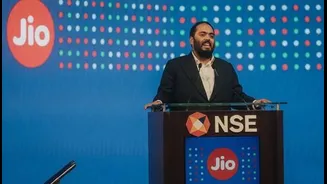


In a seismic shift for India’s corporate landscape, Reliance Group has eclipsed Tata Group as the nation's most valuable conglomerate. This historic moment was not gradual; it was catalysed by the blockbuster stock market debut of Jio Platforms.
A New King of the Market
For the
first time in recent memory, the long-reigning Tata Group has been unseated from its throne as India's largest conglomerate by market capitalisation. Following the hugely successful public listing of its digital and telecom arm, Jio Platforms, the Mukesh Ambani-led Reliance Group's combined market valuation surged to approximately ₹30 lakh crore. This pushed it decisively past the Tata Group, whose collection of listed firms, including titans like Tata Consultancy Services (TCS) and Tata Motors, holds a combined valuation of around ₹25.3 lakh crore. The event marks a symbolic and financial turning point, reflecting a powerful new chapter in a decades-long corporate rivalry.
The Jio Juggernaut Effect
The primary catalyst for this dramatic reordering was the spectacular public debut of Jio Platforms. The company's shares opened at a significant premium, surging over 26% from their issue price on the first day of trading. This explosive performance instantly created immense value, with Jio Platforms alone commanding a market capitalisation of around ₹13 lakh crore, making it one of India's most valuable companies overnight. The successful IPO is a massive validation of Mukesh Ambani's vision to transform Reliance from an oil and petrochemicals giant into a dominant force in India's digital economy. The capital raised is earmarked for strengthening the business and paring down debt, further fortifying its market position.
A Tale of Two Titans
The ascent of Reliance highlights a fascinating contrast in business philosophies. The Tata Group, with a legacy spanning over 150 years, is a diversified conglomerate built on a foundation of trust, stakeholder value, and steady growth across more than 29 publicly listed companies in sectors from salt to software and steel. Its strategy has often been one of patient acquisition and nurturing independent, trusted brands. In contrast, Reliance's strategy under Mukesh Ambani has been one of aggressive disruption, immense scale, and building integrated ecosystems. Rather than buying into many sectors, Reliance focuses its immense capital on dominating a few high-growth areas, rewriting the rules of the market, as it famously did with telecom.
From Oil to Data: A Strategic Pivot
This moment is the culmination of a decade-long strategic pivot by Reliance. Once almost entirely dependent on its oil-to-chemicals business, the company has relentlessly invested in building consumer-facing platforms in retail and, most notably, telecommunications. Jio was a bet of unprecedented scale, offering free voice calls and ultra-cheap data that revolutionised internet access for hundreds of millions of Indians. This strategy wasn't just about selling SIM cards; it was about building a digital platform to deliver a suite of services, from entertainment and commerce to payments and enterprise solutions. The market's huge valuation of Jio reflects its belief in this platform's future monetisation potential, far beyond simple connectivity.
What This Shift Signifies for India
This moment is the culmination of a decade long strategic pivot by Reliance. Once almost entirely dependent on its oil to chemicals business, the company has relentlessly invested in building consumer facing platforms in retail and most notably telecommunications. Jio was a bet of unprecedented scale offering free voice calls and ultra cheap data that revolutionised internet access for hundreds of millions of Indians. This strategy wasnt just about selling SIM cards it was about building a digital platform to deliver a suite of services from entertainment and commerce to payments and enterprise solutions. The markets huge valuation of Jio reflects its belief in this platforms future monetisation potential far beyond simple connectivity.