






A Sky Full of Satellites
The orbital environment around Earth has changed more in the last few years than in the previous sixty. As of early 2026, there are more than 14,000 active satellites circling our planet, a number that has more than tripled since 2019. These aren't just
the large, bespoke satellites for weather forecasting or GPS that have been around for decades. The vast majority of this growth is from thousands of smaller, mass-produced satellites launched in large batches. Add to this the thousands of defunct satellites and over 30,000 pieces of trackable space debris, and low Earth orbit (LEO) is becoming a very busy place.
The Rise of the Mega-Constellations
The primary driver of this satellite boom is the rise of commercial “mega-constellations.” Leading the charge is SpaceX’s Starlink, which aims to provide global high-speed internet. As of mid-2026, Starlink operates over 10,400 active satellites, accounting for the vast majority of all active satellites in orbit. Not to be outdone, Amazon is deploying its own network, formerly known as Project Kuiper and now called Amazon Leo, with plans for over 3,200 satellites. Other players, including OneWeb and multiple Chinese-backed projects, are also building out their own constellations, all competing for a slice of the global connectivity market.
The Promise of Global Connectivity
The main benefit of these massive satellite networks is their potential to bring fast, reliable internet to the entire globe. For the billions of people in remote, rural, or underserved communities, where laying fiber optic cables is economically unfeasible, satellite internet could be a game-changer. These LEO constellations offer significantly lower latency—the delay in data transfer—compared to older geostationary satellites, making them suitable for video calls, online gaming, and other real-time applications. With over 10 million subscribers, Starlink has already demonstrated the demand for this service in more than 160 countries.
Growing Pains: Space Junk and Collision Risk
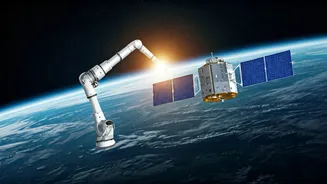
However, this rapid population of space comes with significant risks. The sheer number of satellites dramatically increases the chance of collisions. A single collision can create a cloud of thousands of new pieces of debris, each capable of destroying another satellite, potentially triggering a chain reaction known as the Kessler Syndrome. Near-misses are already becoming common, sometimes requiring satellite operators to perform avoidance maneuvers. In 2019, the European Space Agency had to move one of its satellites to avoid a potential collision with a Starlink satellite. While newer satellites are designed to deorbit and burn up at the end of their 5-year lifespan, the failure rate and the risk from untrackable debris remain serious concerns.
An Obscured View: The Threat to Astronomy
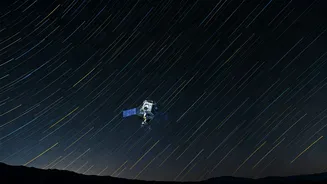
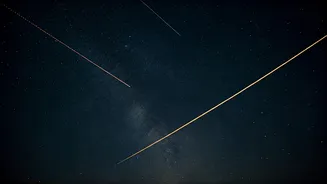
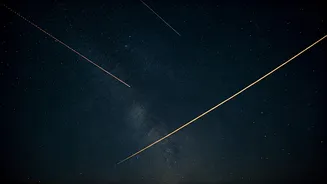
For astronomers, the satellite boom presents an existential threat. The satellites, particularly in the hours after sunset and before sunrise, reflect sunlight and appear as bright streaks across telescope images. These streaks can saturate detectors and ruin sensitive observations of faint, distant objects. While companies like SpaceX have taken steps to reduce the brightness of their satellites, the cumulative effect of tens of thousands—or even potentially millions—of them could dramatically increase the overall brightness of the night sky, hindering our ability to study the universe. A recent study warned that if all proposed constellations are launched, it could have “devastating consequences for astronomy.”
What's Next? Regulation in the New Space Age
The future is even more crowded. SpaceX has filed plans for up to a million satellites for space-based data centers, while other companies are planning hundreds of thousands more. This explosion in activity is far outpacing international space law. The foundational Outer Space Treaty of 1967 holds nations responsible for the activities of their private companies, but there are no global traffic management rules for space. International bodies and space agencies are calling for updated regulatory frameworks to ensure the sustainable use of Earth's orbit, but consensus is difficult to achieve in this new commercial space race.