




The Astronaut-Physician
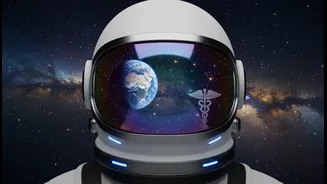
Newly arrived at the International Space Station for an eight-month mission, Dr. Anil Menon is uniquely suited for the task at hand. An Indian-origin NASA astronaut, Colonel in the U.S. Space Force, and practicing emergency medicine physician, Menon’s
career has been a blend of high-stakes medicine and aviation. He was a first responder in Haiti and Nepal, served as a flight surgeon in the Air Force, and was even SpaceX's first flight surgeon, helping to launch the company's inaugural crewed mission. This extensive background in providing medical care in extreme and isolated environments now informs his work on the ultimate frontier, where he has transitioned from caring for astronauts to becoming one.
The Perils of Deep Space
Long-duration missions beyond Earth's protective magnetic field expose astronauts to a barrage of health risks. The weightless environment of microgravity weakens bones and muscles, with astronauts facing the risk of losing up to 1% of bone mass per month. Fluids shift upwards in the body, potentially causing vision problems and a loss of taste and smell. Then there is the constant threat of galactic cosmic radiation, which can damage DNA and increase the long-term risk of cancer. Beyond the physical, the psychological stress of prolonged isolation is another significant hurdle for crews on missions that could last for years.
An Orbiting Laboratory
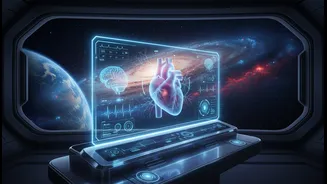
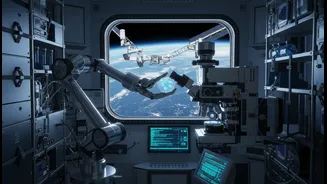
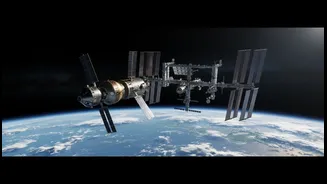
The ISS serves as a vital platform to understand and solve these problems before we send humans to Mars. On his first spaceflight, Menon will be both researcher and test subject for a suite of experiments. A key focus is the physiological toll of spaceflight. He will conduct studies on how microgravity affects blood flow, vein structure, and blood composition. This research is critical, as previous studies have shown that some astronauts experience stagnated blood flow, with one even developing a clot during their mission. Menon's work aims to build a deeper understanding to protect future explorers.
Pioneering Medical Autonomy
For a mission to Mars, where communication delays can be up to 40 minutes and there is no chance for a quick return or resupply, medical self-sufficiency is non-negotiable. Menon is at the forefront of testing technologies to enable this. He is helping to validate a system that produces intravenous (IV) fluids from the station's drinking water, a capability that could be life-saving on a long journey. He will also use ultrasound with the help of augmented reality and artificial intelligence, a system designed to empower astronauts to perform complex medical diagnostics without real-time guidance from Earth. These innovations are about creating a new paradigm of healthcare for deep space.
Beyond Human Health
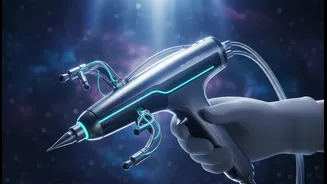
While human safety is the primary focus, Menon's mission also includes research with broader applications. He will continue experiments to refine the in-space manufacturing of semiconductor crystals. Producing these components in microgravity could lead to breakthroughs for high-performance computers and AI. Another fascinating experiment involves bioprinting vascular structures—like blood vessels—in space, which could advance research into aging and future medical treatments back on Earth. These diverse experiments underscore the ISS's role not just as a stepping stone to other worlds, but as a unique laboratory that provides benefits for all of humanity.