







The Six-Month Rule: Your Passport Expires Sooner Than You Think
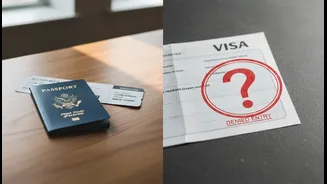
For international travellers, a passport isn't valid right up to its printed expiry date. Most countries, including popular destinations for Indian tourists, enforce a 'six-month validity rule'. This means your passport must be valid for at least six months
from your date of entry into that country. If your passport has five months of validity left, you could be denied boarding by your airline or turned away by immigration officials upon arrival. This rule is in place to ensure that a visitor does not accidentally overstay their visa with an expired travel document, which would create a difficult diplomatic and logistical situation. Many travellers are caught off guard by this, assuming their passport is fine as long as it hasn't officially expired. Thinking of your passport as expiring six months before its printed date is the safest approach for any international travel planning.
The High Cost of a Last-Minute Travel Emergency
Discovering your passport isn't valid just weeks before your flight triggers a dash for an expedited renewal, and this comes at a significant premium. Following a recent revision of fees effective from July 1, 2026, the cost difference between a standard and an urgent renewal has become even more pronounced. A standard renewal for a 36-page adult passport now costs ₹2,500. However, if you're in a hurry and need to use the Tatkaal (expedited) service, that fee doubles to ₹5,000. For a larger, 60-page booklet, the normal fee is ₹3,500, while the Tatkaal fee is ₹6,000. This extra ₹2,500 to ₹3,000 is an entirely avoidable expense that could be better spent on your trip. This fee doesn't even account for the additional stress, potential travel agent fees for rebooking flights, or the anxiety of waiting for your document to arrive in time.
Your Simple Three-Step Prevention Plan
Avoiding this travel emergency is simple and takes only a few minutes. First, make it a habit to check your passport's expiry date before you book any international flights or hotels. Don't rely on memory. Physically open your passport and read the date. Second, once you have the expiry date, count back six months. This is your new, effective 'must-renew-by' date for travel purposes. Set a reminder on your phone or calendar for one year before this date, as you are eligible to apply for a re-issue up to a year before expiry. Third, check the passport validity requirements for your specific destination. While the six-month rule is common, some countries have different requirements. A quick search on the destination country's embassy website can provide definitive answers and peace of mind. Making this check a core part of your travel planning checklist is the key to a smooth journey.
How to Renew Your Passport: The Standard Process
Renewing an Indian passport (officially called a 're-issue') is a straightforward online process. The first step is to register and create an account on the official Passport Seva portal. Once logged in, you can fill out the application form online. After submitting the form, you need to schedule an appointment at your nearest Passport Seva Kendra (PSK) or Post Office Passport Seva Kendra (POPSK) and pay the application fee online. On the day of your appointment, you will need to present your original documents for verification and have your biometrics (photograph and fingerprints) taken. The key is to start this process well in advance. Normal processing can take anywhere from a few weeks to over a month, depending on factors like the time required for police verification. Tatkaal applications are processed much faster, often within 3 to 7 days, but should be reserved for true emergencies due to the high cost.