




A Fiery, Intentional End
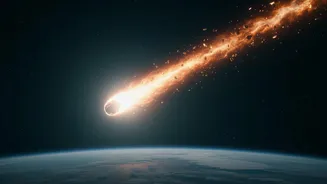
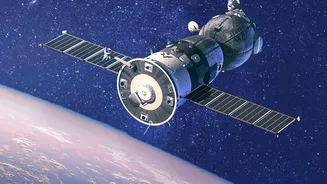
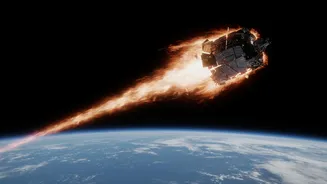
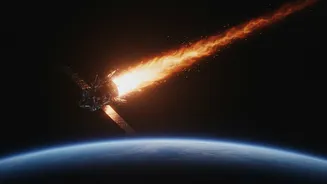
When a satellite in low Earth orbit reaches the end of its life, operators often command it to fall. As it descends, it hits the increasingly dense layers of our atmosphere at incredible speeds—often over 7 kilometres per second. This isn't a gentle float
downwards; it's a violent collision with air molecules. The compression and friction generate immense heat, with temperatures soaring past 1,600°C. Under this thermal assault, the satellite breaks apart, and most of its components—particularly those made of aluminium—melt and vaporise. This process, known as atmospheric burn-up or 'design for demise', is an intentional strategy to prevent dead satellites from becoming hazardous orbital debris. The goal is for the entire object to disintegrate long before any part of it could reach the ground.
The Path of Least Resistance
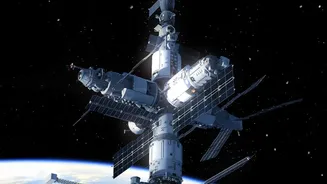
So, why is this fiery destruction the go-to method? The answer is largely economic. Letting a satellite burn up is the cheapest and simplest way to comply with international guidelines that aim to reduce space junk. Alternative methods are far more complex and expensive. A 'controlled re-entry' requires the satellite to have enough fuel to steer itself to a remote, uninhabited area of the ocean, like the South Pacific Uninhabited Area, nicknamed the 'spacecraft cemetery'. This is reserved for massive objects like the International Space Station or large rocket stages. Other futuristic ideas, like active debris removal missions using robotic arms or nets, are still in their infancy and are not yet commercially viable on a large scale. For the thousands of smaller satellites, simply letting them fall and burn is the most practical end-of-life plan.
What Survives the Plunge?
The main problem with this strategy is that it’s not perfect. While much of a satellite is destroyed, not everything burns up. Studies estimate that between 10% and 40% of a satellite's mass can survive the re-entry process. The survivors are typically dense components made of heat-resistant materials like titanium and stainless steel. Items such as fuel tanks, engine parts, and reaction wheels can withstand the extreme temperatures and fall to Earth. While the individual risk of being struck by space debris is incredibly low, it's not zero. In 2024, a piece of equipment discarded from the ISS crashed through the roof of a home in Florida, serving as a stark reminder that what goes up can, and sometimes does, come down in solid chunks.
A Sky Full of Satellites
The risk is being amplified by the rapid growth of satellite 'mega-constellations'. Companies are launching thousands of satellites to provide global internet and other services. This dramatic increase in orbital traffic means a corresponding increase in the number of satellites that will need to be de-orbited in the coming years. With tens of thousands of new satellites planned, the number of uncontrolled re-entries will skyrocket. This increases the cumulative risk of debris striking people, property, or aircraft. Furthermore, scientists are growing concerned about the atmospheric impact, as burning satellites release vaporised metals like alumina into the upper atmosphere, with unknown long-term effects on our planet's climate and ozone layer.