






The US Federal Communications Commission (FCC) has given a green light to one of the most ambitious space projects ever conceived: a plan from SpaceX to deploy up to one million satellites as orbital data centres for artificial intelligence.
What Was Actually Approved?
On November
25, 2026, the FCC granted SpaceX conditional approval for its 'Starmind' constellation, a proposed network of orbital computing modules. The headline figure is one million satellites, a number that would increase the total number of satellites in orbit by a factor of roughly 50. However, this figure represents a maximum ceiling, not a guaranteed deployment. Tech companies often request approval for far more satellites than they intend to deploy to allow for design flexibility. For context, SpaceX initially sought approval for 42,000 Starlink satellites, and its currently operational network numbers just over 11,000. This is not a blank cheque, but the first-ever US authorization for a space-based data center network at this scale.
The 'Starmind' Vision: AI in Orbit
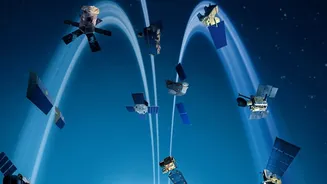
The core idea behind Starmind is to move the immense computational infrastructure required for advanced artificial intelligence from Earth into orbit. Terrestrial data centers are incredibly power-hungry and require vast amounts of land and water for cooling, leading to growing environmental concerns and community pushback. SpaceX's proposal envisions a fleet of satellites, each a self-contained, solar-powered computing module. By harnessing near-constant sunlight in space, these orbital data centers could theoretically operate with greater energy efficiency. The satellites would process massive AI workloads in orbit and relay the results back to Earth, primarily using high-speed laser links to communicate with each other and the existing Starlink network.
A Long and Conditional Road Ahead
The FCC's approval is laden with significant conditions and a long timeline. SpaceX has until November 2033 just to get the first operational Starmind satellite in orbit. The full deployment has a 14-year runway, with milestones requiring 10% of the constellation (100,000 satellites) by 2035 and 50% by 2038, with a final completion date of November 2040. If these deadlines are missed, the authorization becomes void. Furthermore, the FCC deferred decisions on key aspects, particularly regarding debris mitigation for satellites operating above 600 kilometers. SpaceX's request to move retired satellites into higher 'disposal orbits' or around the sun, rather than letting them burn up on re-entry, requires a separate, more detailed application before those higher-altitude deployments can begin.
A Sky Full of Objections
The project faces staunch opposition. Competitors like Amazon's Kuiper Systems and satellite operator Viasat filed petitions to deny the application, citing risks of orbital congestion and radio interference. More fundamentally, the scientific community has raised alarms. The American Astronomical Society expressed dismay, warning that a sky filled with so many bright, moving objects could severely compromise ground-based astronomy. One study projected that thousands of Starmind satellites could be visible to the naked eye, rivalling the number of stars seen in a dark sky. Beyond light pollution, concerns remain about atmospheric pollution from thousands of launches and re-entries, and the cascading risk of collisions creating massive fields of space debris.
The Big Picture: A New Space Race for Data
Despite the hurdles, the FCC's decision signals a new frontier in the commercialization of space, framing the approval as a way to secure American leadership in AI. The immense demand for AI computing is pushing tech giants to explore radical solutions, and SpaceX is not alone. Google and Blue Origin are also reportedly pursuing orbital data center concepts. The approval gives SpaceX a regulatory path forward, but the technical and economic viability of building and operating a data center in the harsh environment of space remains unproven. Cooling advanced computer chips in a vacuum is a major engineering challenge, and the cost of launching and maintaining such a vast network will be astronomical. Ultimately, this conditional license is less a finish line and more the starting gun for a long, complex, and expensive race to build the next generation of cloud infrastructure among the stars.