



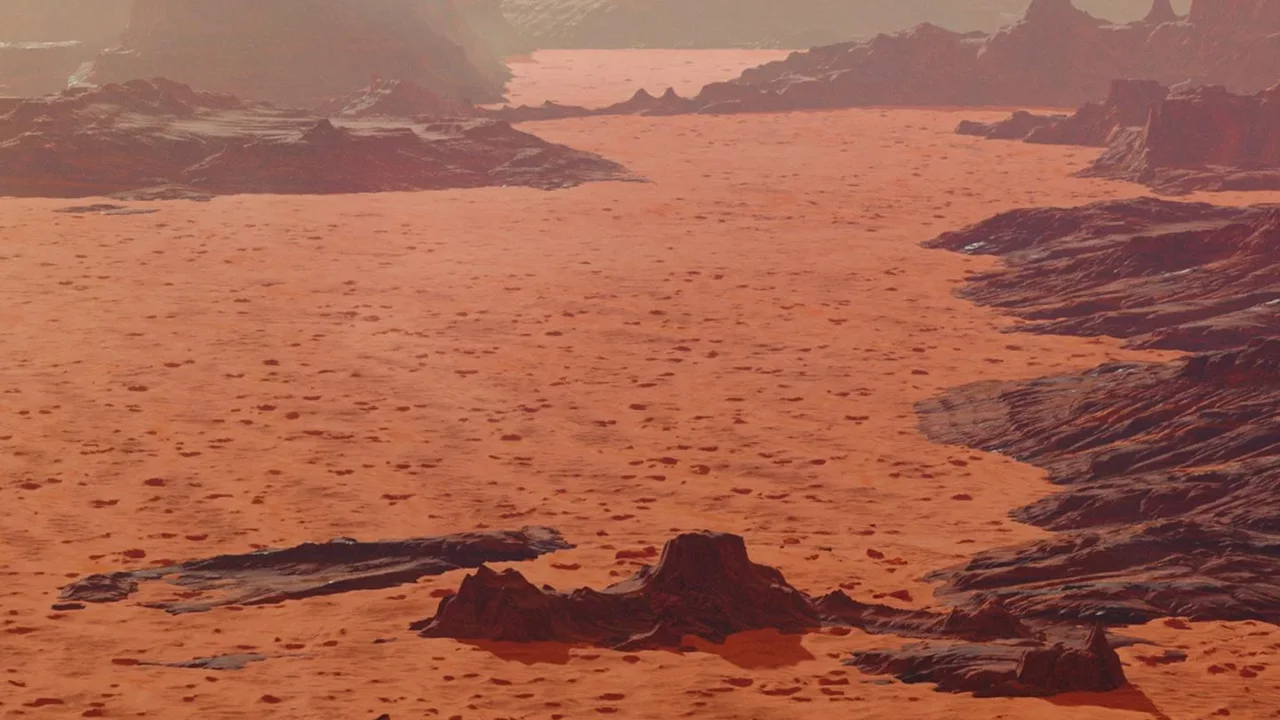

A Crater of Superlatives
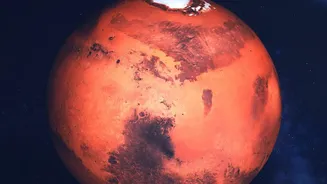
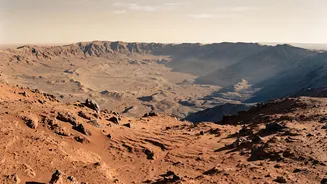
Imagine an impact crater so vast it could swallow most of western Europe. That’s Hellas Planitia, or the Hellas Basin. Spanning 2,300 kilometres in diameter, it’s one of the largest and oldest impact structures in the entire solar system, formed by a colossal
asteroid strike over four billion years ago. More importantly, it is the lowest point on the entire planet. Its floor sits more than seven kilometres below the Martian average “sea level,” creating an environment unlike any other on Mars. This extreme depth means the atmospheric pressure at the bottom is more than double that at the average elevation, the highest found anywhere on the planet. This unique feature makes Hellas a crucial natural laboratory for studying Martian weather.
The Martian Heat Puzzle
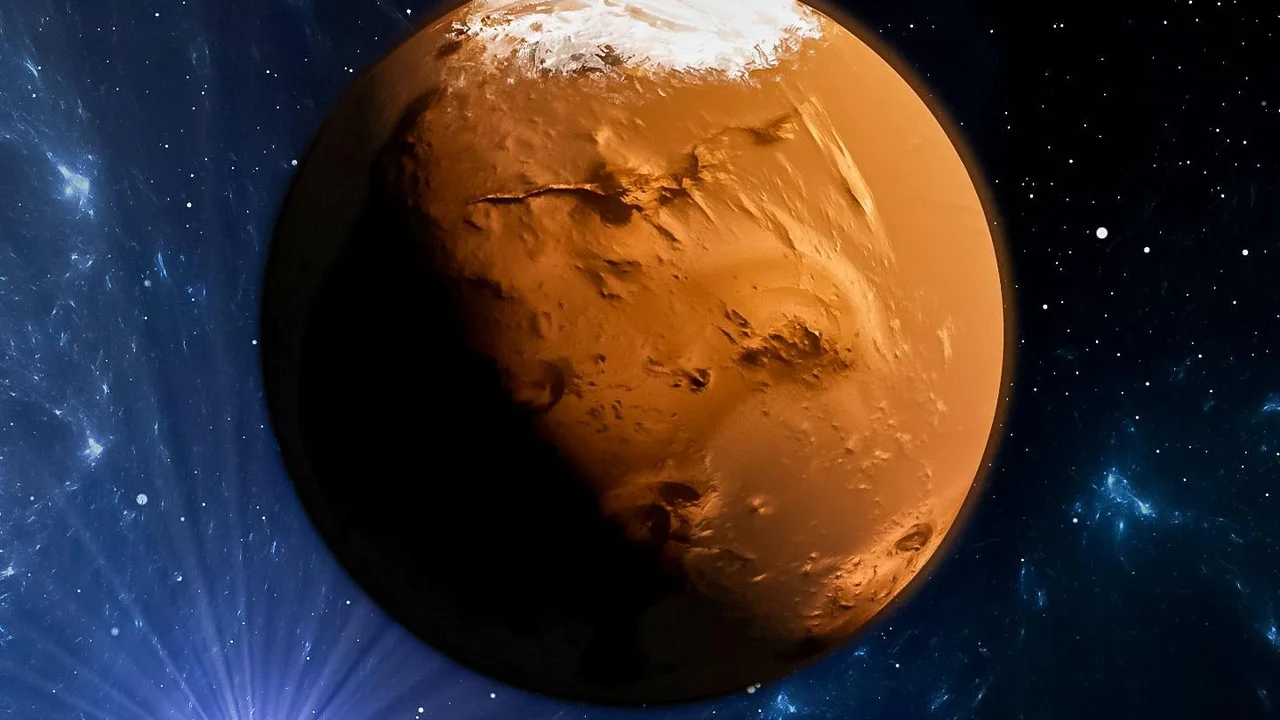
Understanding Mars's climate is a monumental challenge. The planet has a thin atmosphere composed of 95% carbon dioxide and experiences wild temperature swings. Unlike Earth, with its thick atmosphere and vast oceans that store and circulate heat, Mars struggles to retain warmth. Figuring out how what little heat it does receive from the Sun moves from warmer to colder regions is key to understanding its past, present, and future. Scientists have long known that topography plays a role, but the sheer scale of Hellas creates effects that can be felt globally. The basin is a known source of the planet-circling dust storms that periodically shroud Mars, proving it is a significant weather engine. New research now shows it also plays a direct and powerful role in redistributing thermal energy.
An Atmospheric Slosh
Data gathered by instruments aboard NASA’s Mars Reconnaissance Orbiter (MRO) has provided an unprecedented look at the thermal dynamics within the basin. Because the air at the bottom of Hellas is so much denser than the air on the surrounding highlands, it behaves differently. During the day, as the Sun warms the planet, this thick pocket of air heats up and expands. At night, it cools and contracts. This daily cycle creates massive atmospheric waves, known as thermal tides, that are far stronger here than anywhere else on the planet. Think of it like a giant, invisible plunger pushing the Martian atmosphere up and out of the basin, then pulling it back in. This “sloshing” effect generates waves that propagate across the hemisphere, carrying heat with them.
Following the Flow of Water and Warmth
This atmospheric movement has profound effects on the Martian water cycle. During the northern hemisphere's summer, water vapour travels south from the polar ice cap. Climate models show that atmospheric eddies, influenced by the circulation patterns driven by Hellas, play a major role in pulling this moisture across the equator and into the southern hemisphere. Water ice clouds have been observed forming and circling within the basin as this moist air interacts with the colder, denser air of the region. This process of heat and water transport is a critical piece of the puzzle for scientists trying to model what Mars was like billions of years ago, when evidence suggests liquid water may have been stable on the surface, potentially even forming vast lakes within Hellas itself.
Why This Discovery Matters
Mapping how heat moves around Mars is not just an academic exercise. For one, it helps us refine our models of Mars's ancient climate, giving us a better picture of whether the planet was once habitable. Understanding these powerful weather systems is also critical for the safety and success of future missions. The strong winds and dust storms that originate in Hellas can pose a serious threat to both robotic landers and future human explorers. By understanding the engine that drives these phenomena, mission planners can better predict Martian weather. This window into the climate of a planet with a thin atmosphere also provides a valuable comparison point for understanding the fundamental principles that govern planetary climates, including our own.