








The Myth of ‘No Pain, No Gain’
The phrase “no pain, no gain” has been a popular mantra in fitness and work culture for decades, suggesting that true progress requires suffering. While pushing our limits is necessary for growth, this mindset mistakenly groups all forms of discomfort
together. The satisfying burn of muscle fatigue is not the same as the sharp, stabbing sensation of a joint injury. The former is a sign of adaptation; the latter is a warning signal to stop. Confusing the two can lead us to ignore our body's protective mechanisms, turning a healthy pursuit into a source of chronic issues. This mentality doesn't just apply to physical exercise. In the workplace, it manifests as burnout, where mental exhaustion and emotional strain are treated as necessary dues for success.
Decoding Your Body’s Language
Your body communicates in a nuanced language. Learning to interpret it is a critical skill. The discomfort of effort, often called “good pain,” typically feels like a dull ache, a burning sensation in the muscles, or general fatigue. For instance, Delayed Onset Muscle Soreness (DOMS) is a common example, appearing 24 to 48 hours after a tough workout as your muscles repair and strengthen. This type of discomfort is usually spread across a muscle group and subsides within a few days. In contrast, “bad pain” is a red flag. It’s often sharp, stabbing, or shooting. It might be localized to a specific joint, persist long after the activity has stopped, or even worsen with rest. Pain in a joint, as opposed to a muscle, is almost always a signal that something is wrong. Swelling or pain that alters your normal movement patterns are clear signs to stop and seek advice.
When the Brain Overrides the Body
Sometimes, the problem isn't just misinterpreting the signal, but actively ignoring it. Your brain plays a powerful role in pain perception. When we are highly motivated or under pressure, it's easy to push through warning signs. However, repeatedly ignoring your body's signals can have long-term consequences. Over time, your brain can learn to tune out these messages in a process some neuroscientists refer to as nociceptive inhibition. This might seem efficient, but it leads to a dangerous disconnection. You lose the ability to self-regulate because you can no longer accurately feel what your body needs. This is how people find themselves suddenly sidelined by an injury or completely depleted by burnout; the early warnings were there, but they were silenced. Acknowledging pain is not a weakness; it's a form of self-awareness that is crucial for long-term health.
A Practical Guide to Listening
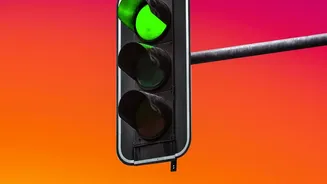
So, how can you practice listening more effectively? One useful tool is a simple traffic light system. Green represents the feeling of healthy effort—the muscle burn or heavy breathing that challenges you but feels safe. This is the zone for growth. Yellow signifies mild discomfort that requires your attention. It’s a signal to slow down, check your form, and be mindful. It isn't a hard stop, but a caution sign. Red is for pain. Any sensation that is sharp, electric, or feels like it's in a joint is a signal to stop immediately. Pushing through red-light signals is what leads to injury. This applies beyond exercise. Eye strain from screen time is a yellow light, prompting a break. A throbbing headache or sharp back pain is a red light, indicating a need for rest and assessment, not another cup of coffee to power through.
Sustainable Growth Over Short-Term Gains
Ultimately, learning to differentiate between ordinary effort and pain is about playing the long game. Sustainable progress in any area of life—whether building strength, learning a skill, or advancing a career—is built on a foundation of consistency, not intensity born from self-neglect. By respecting your body’s signals, you're not taking the easy way out; you're being strategic. You're ensuring you can show up again tomorrow, and the day after, without being forced into a long recovery by an avoidable injury or a debilitating bout of burnout. This mindful approach, sometimes referred to as somatic awareness, allows for more precise control and a deeper understanding of your body, which prevents injury before it happens. It replaces the brute-force mentality of “no pain, no gain” with a more intelligent and compassionate approach: effort with awareness.