

A Portrait of a Dying Star
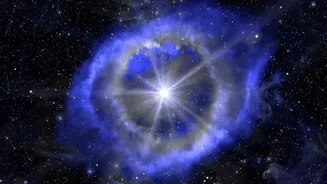
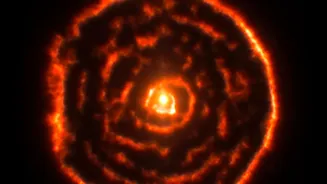
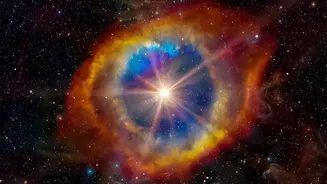
The Lion Nebula, known formally as NGC 2392, is what astronomers call a planetary nebula. But don't let the name fool you; it has nothing to do with planets. It's the beautiful, glowing shroud of gas and dust cast off by a dying star similar to our own Sun.
At its heart sits a tiny, incredibly hot white dwarf, the collapsed core of the original star. This stellar remnant is blasting its surroundings with intense radiation, causing the ejected gas to glow. The nebula gets its nickname from its appearance; the central bubble of gas resembles a lion's face, surrounded by a filamentary 'mane'. This entire structure is a snapshot in time, showing the final, dramatic phases of a star's life. It has taken thousands of years to form and will eventually disperse into space over the next 10,000 years or so, a fleeting moment in cosmic terms.
Seeing Through the Cosmic Dust
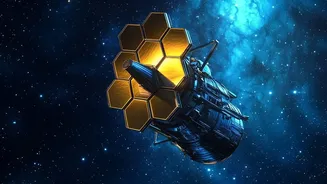
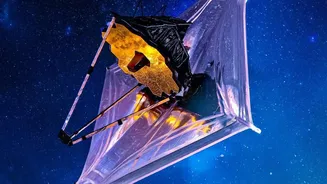
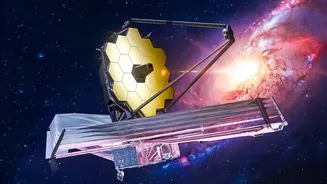
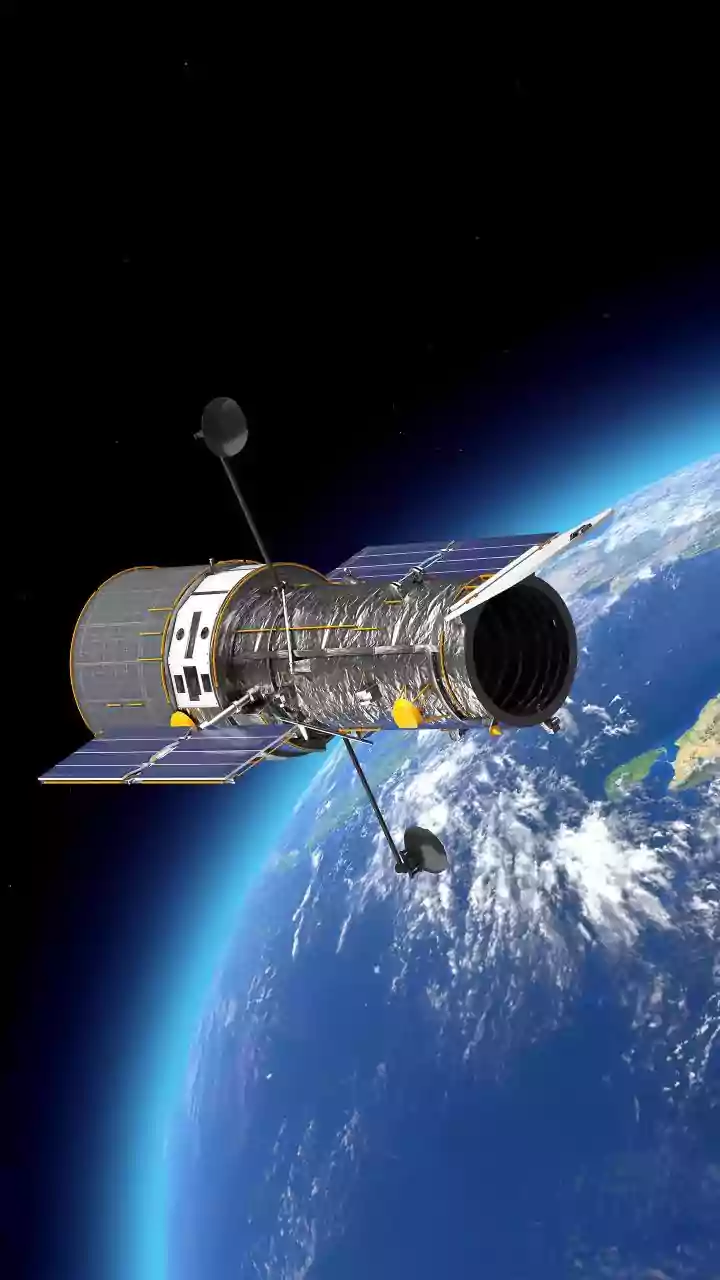
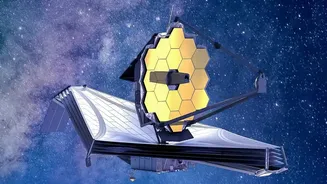
While the Hubble Space Telescope gave us stunning views of the Lion Nebula in visible light, the James Webb Space Telescope sees the universe in infrared. This allows it to peer through obscuring dust and detect the faint heat signatures of different molecules and gases. The new portrait is a composite image, combining data from Webb's Near-Infrared Camera (NIRCam) and Mid-Infrared Instrument (MIRI). This combination gives scientists a much more complete picture. While the overall shape is familiar, Webb's vision highlights new details with incredible sharpness, such as compact clumps of dust and a delicate haze of ionised gas that were previously difficult to distinguish. It's like switching from a standard television to a high-definition one; the same scene is there, but suddenly you can see every blade of grass.
The Puzzle of Ionised Gas
So, what exactly is ionised gas, and why are scientists so interested in it? Gas becomes 'ionised' when it's superheated to the point that electrons are stripped away from their atoms. In the Lion Nebula, the intense ultraviolet radiation from the central white dwarf is 'cooking' the surrounding gas, creating a massive bubble of ionised hydrogen. This expanding bubble is the key driver of the nebula's structure. Scientists want to understand how this process works in detail. A major question is why planetary nebulae form such complex shapes, with intricate rings, shells, and filaments, rather than just being simple, uniform spheres. The interaction between the hot, ionised gas and the cooler dust and gas in the 'mane' holds the answers.
What the New Clues Reveal
Webb's new image provides crucial data points to help solve this puzzle. The incredible resolution reveals the fine structure where the expanding bubble of ionised gas ploughs into the surrounding material, creating shock fronts. The image clearly distinguishes between the different components. We can see the 'face' of the lion, which is the hot ionised gas bubble, and the 'mane', which is the interior of a dust shell being lit up by the central star. Within this mane, Webb has highlighted compact clumps of dust and molecular hydrogen that have managed to survive the onslaught of radiation from the star. These dense knots are essentially protecting the material behind them, creating the beautiful, streaky, tail-like features that make up the mane. By studying the precise shape and location of these structures, scientists can better model how the fast stellar winds from the dying star sculpt the nebula.
Why This Cosmic Lion's Roar Matters
Studying the Lion Nebula isn't just about admiring a pretty picture. Planetary nebulae are cosmic recycling plants. They enrich the interstellar medium with heavier elements, like carbon and nitrogen, that were forged inside the parent star. These are the very elements necessary for forming new stars, planets, and even life. Understanding how this material is distributed back into the galaxy is fundamental to understanding our own cosmic origins. The detailed observations of the ionisation process in NGC 2392 provide a perfect laboratory for testing and refining theories of stellar evolution. Each new image from Webb is not just a postcard from deep space; it's a page from the universe's instruction manual, helping us read the story of how stars live and die.