



The Whispers from Woking
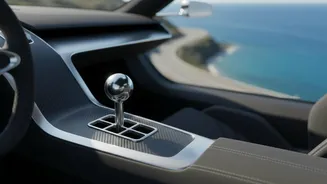
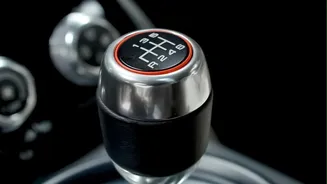
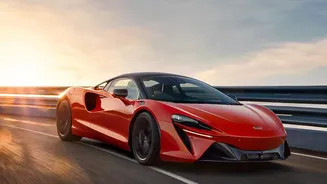
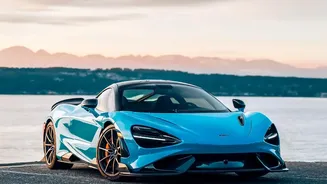
Recent reports have ignited the automotive world with speculation that McLaren is developing an ultra-exclusive supercar with a manual transmission. According to several outlets, a project codenamed "P50" could debut as soon as Monterey Car Week in August.
While McLaren has remained officially silent, the rumour suggests a limited production run of fewer than 100 cars, with a price tag expected to surpass the brand's current flagships. If true, this would be the first road-going McLaren with a clutch pedal since the final F1 rolled out of the Woking factory in 1998. This potential move comes as a surprise from a brand that has built its modern identity on the relentless pursuit of speed through advanced, paddle-shifted dual-clutch transmissions (DCTs).
Echoes of the Iconic F1
To understand the gravity of this rumour, one must look back at the McLaren F1. Produced from 1992 to 1998, the F1 was a landmark achievement in automotive engineering. Its designer, Gordon Murray, was obsessed with low weight, high power, and pure driver involvement. A key component of that philosophy was its bespoke six-speed manual gearbox. In an era before paddle shifters dominated, mastering the F1’s clutch and gear lever was central to its driving experience, connecting the driver directly to its magnificent 6.1-liter BMW V12 engine. The F1 wasn't just fast; it was engaging in a raw, mechanical way that modern supercars, for all their speed, often struggle to replicate. It remains the benchmark for analog performance.
The Unstoppable Rise of the Automatic
Since the F1, every McLaren road car has used a sequential or dual-clutch automatic transmission. The reason is simple: they are faster. A DCT can change gears in milliseconds, far quicker than any human, ensuring the engine remains in its optimal power band for maximum acceleration and flawless lap times. For a company built on Formula 1 technology and a philosophy of measurable performance gains, abandoning the manual was a logical step. Competitors like Ferrari and Lamborghini followed the same path, leaving the three-pedal supercar to become a relic of a bygone era as performance metrics became the industry's primary battleground. The focus shifted from how a car felt to how fast its numbers were.
A Shift Towards Analog Soul
So, why the potential change of heart? The market is shifting. A growing chorus of wealthy collectors and driving purists are now placing a premium on "analog" experiences. Cars that demand driver skill and offer a more physical, unfiltered connection are commanding huge prices and immense respect. Competitors have taken notice. Porsche has found immense success with manual versions of its GT cars, while boutique brands like Pagani and Koenigsegg have incorporated manual transmissions into their latest hypercars. Even Ferrari has recently introduced a model that simulates a gated manual experience. This trend suggests that for some buyers, the emotional engagement of driving is becoming more important than shaving another tenth of a second off a lap time.
More Than Just a Gearbox
Developing a manual for a modern McLaren would be no small feat. It's not as simple as dropping an old transmission into a new car. A new gearbox would need to be engineered to handle the immense torque of a modern turbocharged or hybrid powertrain, a significant technical and financial challenge. It remains unclear if the rumoured P50 would use a traditional mechanical linkage or a 'shift-by-wire' system that mimics the feel of a manual. Either way, it would represent a philosophical pivot for McLaren, an admission that pure, objective performance isn't the only thing that matters. The decision to even explore this path signals that the definition of a 'performance car' may be broadening to once again include the driver's heart, not just the car's stopwatch.