



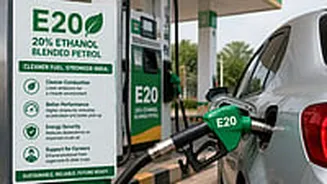


What Is E20 and Why Is It Everywhere?
E20 is petrol blended with 20% ethanol, an alcohol-based biofuel typically made from agricultural products like sugarcane and maize. India has aggressively rolled out its Ethanol Blended Petrol (EBP) Programme, achieving the E20 target nationwide in 2025,
ahead of schedule. The government's push has three main goals: reduce the country's massive oil import bill, lower vehicle emissions, and provide an additional income stream for farmers. For the nation, it's a strategic move towards energy security and a cleaner environment. For drivers, it has meant a fundamental change in the fuel they use every day, as E20 has replaced the previous E10 (10% ethanol) blend at most pumps.
The Big Question: Does E20 Reduce Mileage?
The short answer is yes, but not by as much as viral claims suggest. The core of the issue lies in physics: ethanol has about 30-35% less energy density than pure petrol. This means that for the same volume, E20 fuel carries slightly less energy. As a result, a minor drop in fuel efficiency is scientifically expected. Government bodies and automotive research agencies like ARAI estimate the drop to be between 3% and 6%. A dramatic fall from 17 km/l to 5 km/l, as claimed in one viral video, is considered technically impossible due to the fuel blend alone and likely points to other issues like a faulty sensor or fuel contamination.
The Government and Industry Response
In response to the growing public concern, both the Ministry of Petroleum and Natural Gas and automobile manufacturers have issued clarifications. The government has dismissed claims of significant mileage loss and engine damage as misleading, stating that extensive tests showed only 'marginal changes' in mileage. Petroleum Minister Hardeep Singh Puri acknowledged a "minor" drop but emphasized that E20 offers other benefits, such as improved acceleration and reduced engine knocking due to its higher octane rating. Automakers have also confirmed that using E20 fuel will not void the warranty on compliant vehicles.
Is Your Car Ready for E20?
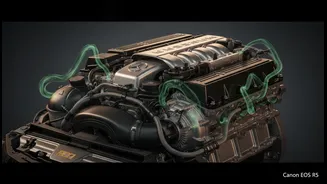
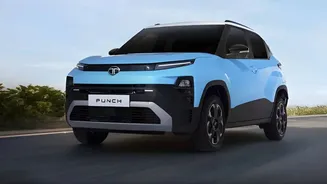
This is a critical point of distinction. Most cars manufactured in India after April 2023 are explicitly E20-compliant, meaning their engines and fuel systems were designed to handle the 20% ethanol blend. Major manufacturers like Maruti Suzuki, Hyundai, and Tata Motors have confirmed their model lineups are E20-ready. However, for vehicles made before 2023, the situation is more complex. While many can run on E20, there are potential long-term risks. Ethanol can be corrosive to certain rubber and plastic components in older fuel systems that were not designed for it. Owners of older cars should consult their manufacturer's guidelines and be mindful of potential issues like hardened seals or clogged fuel filters over time.
Beyond Fuel: Other Factors That Kill Mileage
While E20 does cause a slight drop in efficiency, it's often a scapegoat for other mileage-draining culprits. Factors like driving style (aggressive acceleration and braking), traffic conditions, incorrect tyre pressure, vehicle load, and overall engine maintenance have a far greater impact on your car's fuel economy. A poorly maintained engine or under-inflated tyres can easily reduce mileage by more than 10%, far exceeding the minor effect of the E20 blend. Before blaming the fuel, it's wise to ensure your vehicle is in good health and your driving habits are efficient.