






An Audacious Dream
In 2018, two former ISRO scientists, Pawan Kumar Chandana and Naga Bharath Daka, shared a vision that seemed almost impossible: to build and launch rockets privately in India. They saw a future where satellite launches were as simple and on-demand as booking
a cab. Chandana, an IIT Kharagpur alumnus who worked on India's heaviest rocket, the GSLV Mk III, and Daka, an IIT Madras graduate specializing in flight computer engineering, decided to leave their stable jobs at the nation's premier space agency. They founded Skyroot Aerospace in Hyderabad, driven by the belief that India’s space sector was on the cusp of major change and ready for private enterprise to play a leading role.
The First Believer
The early days were challenging. Rocket development is capital-intensive, and the concept of a private Indian company sending objects into orbit was unproven, making many investors hesitant. Undeterred, Chandana and Daka reached out to entrepreneur Mukesh Bansal, founder of Myntra and Cult.fit, with a message on LinkedIn. At the time, no clear policy for private space launches existed, but Bansal saw potential in the founders' passion and audacity. He became Skyroot's first and only angel investor, putting in approximately ₹12 crore long before institutional venture capital showed interest. This initial investment was not just financial fuel; it was a critical vote of confidence that validated the young company's ambitious mission and helped them navigate the early years, including a further infusion from Bansal to retain the team during the pandemic.
From Suborbital to a Historic Orbit
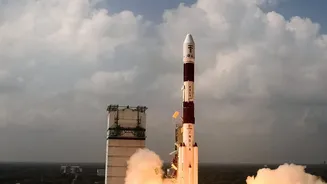
With crucial early backing secured, Skyroot began its journey of turning blueprints into reality. A key milestone came in November 2022 with the launch of Vikram-S. This suborbital mission, named 'Prarambh' (The Beginning), was India's first-ever private rocket launch and proved Skyroot's capabilities. While a major success, reaching suborbital space is a different challenge from achieving a stable orbit around the Earth. The ultimate prize remained ahead. That moment arrived on July 18, 2026. Skyroot's Vikram-1 rocket lifted off from Sriharikota, and in a 16-minute flight, successfully reached a 450-kilometer low Earth orbit. The mission, named 'Aagaman' (Arrival), officially made Skyroot the first private Indian company to achieve an orbital launch.
A New Era for Indian Space
The successful launch of Vikram-1 was more than just a corporate milestone; it was a landmark event for the entire nation. It placed India alongside the United States and China as the only countries with a demonstrated private orbital launch capability. This achievement was made possible not only by Skyroot’s innovation but also by evolving government policy. The opening of the space sector to private participation in 2020, and the support of agencies like ISRO and IN-SPACe, created the ecosystem necessary for such a venture to succeed. For Skyroot, the mission also showcased its technological prowess, featuring a carbon-composite structure and 3D-printed engines that enable faster production and mission turnaround, key differentiators in the competitive small satellite launch market.