





A Market in Overdrive
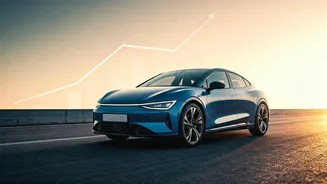
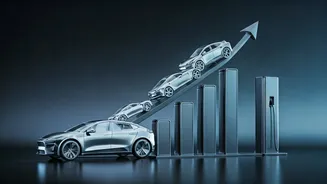
The numbers for the April-June 2026 quarter paint a vivid picture of a market hitting the accelerator. According to Vahan portal data, electric passenger vehicle registrations soared to 82,737 units, an astonishing 89.3% jump from the 43,710 units in the same
period last year. This surge represents the strongest quarterly growth in over a year and indicates a decisive shift in consumer preference. The momentum was consistent, with registrations climbing each month from 24,963 in April to 30,454 in June. Industry executives attribute this boom to the improving economics of EV ownership, especially as rising fuel prices, partly linked to the West Asia conflict, have made buyers more seriously consider battery-powered alternatives.
Tata's Blueprint for Dominance
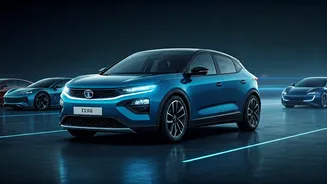
At the forefront of this electric wave is Tata Motors, which has solidified its leadership position. The company registered 32,283 EVs in the quarter, more than doubling its performance from the previous year and increasing its market share to 39% from 36.1%. This success isn't accidental. It’s built on a multi-pronged strategy that caters to various price points. With a diverse portfolio including the popular Nexon EV, the accessible Tiago EV, and the recent success of the Punch EV, Tata offers a breadth of choice that competitors currently struggle to match. Shailesh Chandra, a key executive at Tata Motors, noted that market conditions have shifted from a 'push' to a 'pull', with customers now actively seeking out EVs.
The Challengers Gather Pace
While Tata is the undisputed leader, the race is far from over. The competitive landscape is heating up significantly. Mahindra & Mahindra has firmly secured the second spot, nearly doubling its registrations to 20,112 units, giving it a 24.3% market share. Together, Tata and Mahindra account for over 63% of the entire electric passenger vehicle market. JSW MG Motor India holds third place with 16,502 units. Perhaps most notably, the quarter marked the impactful entry of new players. Maruti Suzuki, India's largest carmaker, registered 4,894 units in its first full quarter in the EV space with its eVitara model. Vietnamese manufacturer VinFast also made a strong debut, clocking 3,973 registrations.
Factors Fueling the Boom
Several factors are converging to create this fertile ground for EV growth. Government support, through subsidies and tax benefits, continues to lower the barrier to entry for consumers. The expansion of charging infrastructure, though still a work in progress, is boosting consumer confidence. Automakers are also playing a crucial role by launching a wider variety of models, with over 35 expected by the next financial year, many in the more accessible sub-₹15 lakh segment. Furthermore, advancements in battery technology are helping to tackle 'range anxiety,' with some mid-range models now offering 300-450 kilometres on a single charge.
The Road Ahead
Despite the impressive growth, challenges remain. The high upfront cost of EVs compared to their internal combustion engine (ICE) counterparts is still a significant hurdle for many potential buyers. The market's success is also heavily concentrated in urban and semi-urban areas, with rural penetration lagging due to a lack of charging infrastructure. Policy consistency at both the central and state levels will be crucial to maintaining this growth trajectory. The industry is also heavily reliant on imported battery cells, exposing it to global supply chain volatility. While the path to mass adoption has its bumps, the first quarter's results show an undeniable shift in India's automotive landscape.