





Permanent Job Displacement
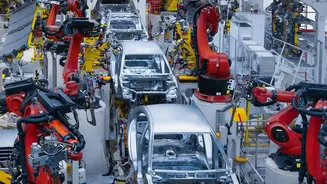
One of Gates' most immediate concerns is the permanent loss of jobs across both white-collar and blue-collar sectors. He argues that unlike previous technological shifts, AI directly competes with human cognition, capable of replacing tasks in fields
like customer service, law, medicine, and software development. He is particularly worried about the disappearance of entry-level positions, which have traditionally been the training ground for the future workforce. As AI's work becomes nearly error-free, the economic incentive for companies to replace human workers will be overwhelming. This transition, he warns, will happen rapidly, affecting industries over a decade rather than generations.
Widespread Safety and Security Threats
Gates has sounded the alarm on how AI lowers the barrier for bad actors to inflict harm on a massive scale. He points to the risk of AI-powered cyberattacks, fraud, and the creation of dangerous biological weapons by individuals or small groups who previously would have lacked the necessary expertise. Cybersecurity experts, he notes, are deeply concerned because attackers are gaining powerful new tools faster than defenders can patch vulnerabilities. This could spark a new type of arms race between nations, as each government vies for the most powerful AI capabilities to deter adversaries, potentially making everyone less safe.
Misinformation and the Erosion of Trust
The rise of AI-generated deepfakes and targeted misinformation poses a severe threat to democracy and social cohesion, according to Gates. While propaganda is not new, AI dramatically scales the ability to create convincing fake audio, video, and text, which can be used to scam individuals or manipulate public opinion during elections. In an era where AI can tailor falsehoods to individual users, the ability to distinguish truth from fiction becomes a critical life skill, yet he worries our capacity for critical thinking might diminish with over-reliance on the technology.
Harm to Children and Human Development
Gates has expressed specific worries about AI's impact on young people. One concern is that an over-reliance on AI for tasks like writing essays could prevent students from learning essential skills. He also raises the issue of psychological harm. The development of highly engaging, always-agreeable AI companions could foster addictive behaviors and displace meaningful real-world friendships. Gates warns that the risks young people already face from social media, such as cyberbullying and compulsive use, could be magnified and become harder to escape in an AI-driven world.
The Challenge of Controlling Superintelligence
Looking further into the future, Gates acknowledges the long-term risk of losing control of AI systems that surpass human intelligence. While he doesn't believe we are there yet, he is concerned by the rapid, and sometimes unexpected, progress in the field. He notes that even AI experts are beginning to question whether we will be able to control these advanced systems. Comparing the potential transformative power of AI to that of nuclear energy, he has urged for the creation of strong ethical frameworks and oversight to manage this risk responsibly before it becomes acute.
His Proposed Solutions
Gates is not just raising alarms; he is also proposing solutions. He has advocated for policies that would prepare society for the economic shift, including a tax on robots or AI tokens to slow the pace of human displacement and fund support for workers. Another idea he calls "Human Reserved" would involve society deciding to protect certain jobs, like childcare, from AI replacement, similar to how we create nature reserves. He believes that society is not adequately preparing for this transition and that leaders must act now to create a plan to ease our entry into the AI era.