




A formidable challenge
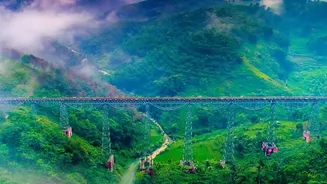
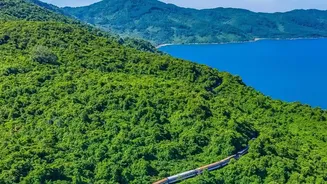
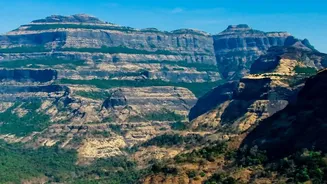
The Western Ghats are a railway engineer's nightmare. The specific section under scrutiny, the 55-kilometre stretch between Sakleshpur and Subrahmanya Road on the Bengaluru-Mangaluru route, is one of India's most technically demanding railway lines. It
features steep gradients, with inclines as sharp as 1-in-50, a staggering 57 tunnels, 226 bridges, and over 100 sharp curves. This terrain is also highly susceptible to landslides, especially during the monsoon season. Historically, conventional trains have required the help of additional 'banker' locomotives to be pushed or pulled up these steep sections, a time-consuming process that limits speed and efficiency. For the Vande Bharat to succeed here, it must navigate this hostile environment on its own.
The trials begin
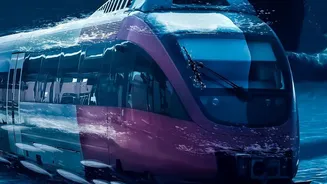
To answer this critical question, the South Western Railway's Mysuru Division began a series of intensive field trials in mid-August 2026. A specially manufactured 20-car Vande Bharat rake was sent from the Integral Coach Factory (ICF) in Chennai for these tests. Onboard are personnel from the Research Designs and Standards Organisation (RDSO), who are meticulously examining every aspect of the train's performance. The trials, which commenced on August 12 and are scheduled to continue for several days, involve running the train up and down the ghat section to gather extensive data.
Technology under the microscope
These are no ordinary test runs. The key technology being evaluated is a modified Automatic Emergency Braking (AEB) system. This system is designed to automatically apply the brakes if the train exceeds the permitted speed limit on the downhill stretches of the ghat, which is capped at a cautious 30 kmph. Unlike conventional trains, the Vande Bharat is a self-propelled trainset, meaning power is distributed across its coaches. While this allows for faster acceleration, it also presents unique challenges for braking and stability on steep, winding tracks. The RDSO teams are closely monitoring the train's acceleration on inclines, its stability while navigating sharp curves, and the overall effectiveness of its braking systems under real-world pressure.
What success would mean
The successful completion of these trials would be a landmark achievement for Indian Railways. It would pave the way for launching a regular Vande Bharat service connecting Bengaluru with the coastal city of Mangaluru, a route that has long been anticipated. This would not only provide faster and more comfortable travel between Karnataka's capital and its coastal gateway but also significantly boost tourism and commerce in the region. A Vande Bharat service on this route would eliminate the need for banker locomotives, potentially reducing travel time and improving operational efficiency. The full electrification of the Mangaluru-Bengaluru route, completed in December 2025 after a two-year effort on the difficult ghat section, set the stage for these trials.