





Ukraine Claims a Bold Strike
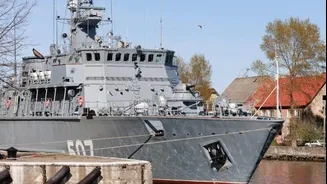
Ukrainian officials, including President Volodymyr Zelenskyy, have announced a successful and 'exemplary' operation targeting Russian naval vessels. According to their statements, Ukrainian-made naval drones struck and sank the Russian corvette 'Merkury'
while it was docked at a naval base in Benghazi, Libya, on November 22. Kyiv also claimed to have hit a second vessel, the MV Angara, which it alleges was transporting military equipment. The operation, conducted approximately 2,400 kilometres from Ukraine, was heralded as proof that Russian military logistics have no safe routes, even in the Mediterranean. Zelenskyy confirmed seven domestically produced drones were used, releasing video footage that appeared to show the moment of impact and subsequent explosions.
Russia's Muted Response and Counter-Claims
In stark contrast to Ukraine's detailed announcements, Moscow has offered no immediate official comment on the alleged sinking of the 'Merkury'. This silence is a common tactic in the ongoing information war, often employed to avoid confirming a battlefield loss. However, Libyan officials aligned with the eastern administration in Benghazi did confirm an attack occurred, causing an explosion and fire, and noted the vessel had been docked for refuelling. They announced a joint investigation with Moscow. Historically, Russia has often claimed to have repelled Ukrainian naval drone attacks, reporting that its ships destroyed the incoming threats with no damage to its own assets. Without a formal statement from Russia's Ministry of Defence on this specific incident, the world is left with Ukraine's claims and satellite imagery that appears to show the capsized vessel.
The Challenge of Independent Verification
The headline's assertion that the outcome 'requires independent confirmation' is central to understanding this event. In the heat of conflict, initial reports from either side are heavily influenced by propaganda needs. Ukraine has a clear motive to publicise successes to boost domestic morale and demonstrate the effectiveness of its military innovation to international partners. Conversely, Russia has a motive to downplay or deny losses to project an image of strength. Independent verification relies on sources like commercial satellite imagery and open-source intelligence (OSINT) analysts who scrutinise photos and videos. While some satellite images do appear to show a capsized vessel in the Benghazi port, definitive confirmation of the ship's identity and the extent of the damage often takes time. The UN has already called for an independent investigation into the incident.
A New Theatre in a Sprawling War
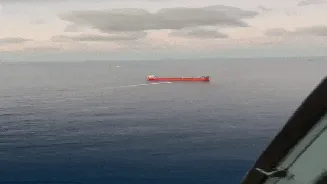
This strike, if fully confirmed, represents a significant geographical expansion of Ukraine's maritime campaign. While the Black Sea has been the primary naval battlefield, this operation in the Mediterranean—along with a separate, recent Ukrainian-claimed strike on a Russian cargo ship in the Baltic Sea—demonstrates a growing reach. It highlights Ukraine's strategy of asymmetric warfare: using cost-effective, domestically produced drones to challenge a more powerful conventional navy. These long-range attacks are designed to disrupt Russia's global logistics and military operations, particularly its support for allies and proxies in regions like Africa and the Middle East. The operation, however, has created diplomatic friction, with both of Libya's rival governments condemning the attack as a violation of their sovereignty.