




A Slice of British History in the Hills
Before it was Raj Bhavan, this magnificent structure was known as Government House. Its story begins in the late 19th century when Nainital served as the summer capital of the United Provinces during British rule. The foundation stone was laid on April
27, 1897, and construction was completed in 1899 or 1900, depending on the source. Conceived as a summer residence for the British governors, it was designed to project power and offer a grand escape from the heat of the plains. The two-storeyed mansion, with its 113 rooms, was built to be a self-contained world of luxury and administration, a symbol of British heritage set against the backdrop of the Kumaon Himalayas. After India's independence, it was renamed Raj Bhavan and fittingly, its first Indian occupant as Governor of Uttar Pradesh was the celebrated poet and freedom fighter, Sarojini Naidu.
The Vision of an Architect
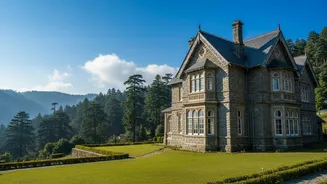
The design is credited to architect F.W. Stevens, sometimes noted as 'Stephens'. He was tasked with creating a building that was both grand and suited to its hilly environment. The architectural style is often described as Victorian Gothic or Domestic Gothic, with strong resemblances to a Scottish castle. This wasn't just a stylistic choice; it was a popular architectural movement in 19th-century Britain that was exported across the empire. The structure is dominated by its striking facade with turrets and pointed arches, creating a dramatic silhouette against the sky. The construction itself was a masterful blend of imported materials and local resources. While glass, tiles, and brass fittings were brought from England, the primary building material was a local dark grey marble and dolomite limestone, giving it a solid, dignified appearance.
Decoding the Gothic Grandeur
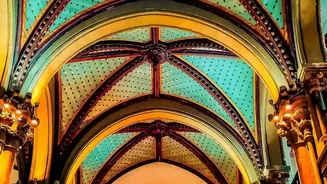
The building is a textbook example of Gothic Revival architecture, adapted for an Indian climate. The exterior showcases classic elements like castellated turrets and pointed arches. Inside, the grandeur continues with extensive use of fine wood. The sweeping staircases, window panels, and dining room were crafted from Burma teak, giving the interiors a rich, royal touch. Other woods like local pine, shisham, and satinwood were also used for flooring and trusses. The entire structure is laid out in the shape of the letter 'E', a common design for large manors of that era, allowing for light and air to penetrate the deep building. The overall effect is one of formidable elegance, a style meant to impress and endure.
More Than Just a Governor's Residence
Today, Raj Bhavan serves as the official residence for the Governor of Uttarakhand and hosts visiting dignitaries. However, its identity has evolved far beyond its official function. Recognizing its historical and architectural significance, large parts of the estate are open to the public for guided tours. The sprawling grounds cover over 200 acres and include not just the main mansion, but also lush gardens, a swimming pool, and dense forests of deodar and oak. Perhaps the most famous feature after the building itself is the 45-acre vintage golf course. Established in 1936, this 18-hole course is one of the oldest in India and remains a challenging and scenic spot for enthusiasts.
A Living Landmark and Tourist Magnet
Raj Bhavan is not a dusty museum; it is a living, breathing part of Nainital's identity. Its blend of history, architecture, and nature makes it a premier tourist attraction. Visitors flock to admire the European-style castle, walk through its manicured lawns, and capture photographs against the stunning Victorian backdrop. Guided tours offer a glimpse into the lavish interiors, with their chandeliers and period furniture, transporting visitors back in time. The entry fee is nominal, making it an accessible piece of heritage for everyone. The property is generally open on weekdays, but it is always wise to check the latest timings as they can vary by season. Its enduring popularity confirms its status as a standout landmark, a must-visit for anyone wishing to understand the rich history of Nainital.