



This Year's Alarming Numbers
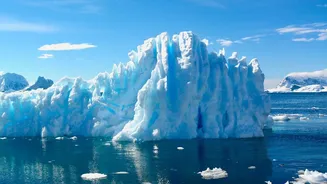
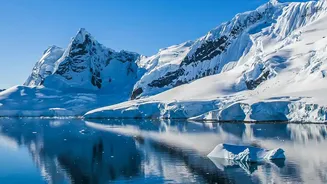
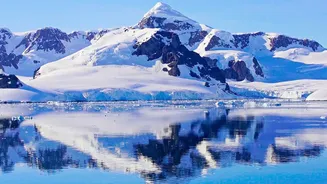
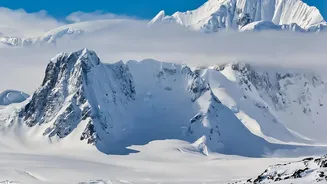
Scientists at the National Snow and Ice Data Center (NSIDC) have confirmed that Antarctica’s winter sea ice reached its maximum extent for 2026 on September 14, and the news is sobering. The ice covered 17.59 million square kilometres, an area about one
million square kilometres less than the long-term average. This makes it the third-lowest winter maximum since consistent satellite monitoring began in 1979. What is particularly concerning for researchers is that this is not an isolated event. The four lowest winter maximums ever recorded have all occurred in the last four years, signalling a potential shift in the stability of the entire Antarctic system.
A Sudden and Dramatic Shift
For years, Antarctic sea ice bucked the global trend. While the Arctic experienced a steady and dramatic decline, sea ice around the southern continent was stable, and even slightly expanding, until about 2016. Then, the system appeared to flip. A sudden, sharp decline occurred, and the sea ice has failed to recover since. Scientists are now racing to understand this abrupt change. One leading theory points to a buildup of ocean heat that had been trapped beneath a layer of less salty surface water. A combination of changing wind patterns, likely linked to the warming climate, may have churned up this warmer, deeper water, melting the ice from below and triggering the new era of low-ice conditions we are now witnessing.
Why Antarctica Isn't the Arctic
It’s crucial to understand that the two poles are fundamentally different. The Arctic is an ocean surrounded by land, while Antarctica is a massive land continent surrounded by ocean. This geographical distinction dictates how their ice behaves. Arctic sea ice is more constrained and has been in a clear, long-term decline directly linked to rising air and ocean temperatures. Antarctica’s sea ice, on the other hand, is more variable, influenced by complex interactions between the ocean, the atmosphere, and the vast ice sheet on land. For decades, this complexity masked a clear climate change signal, but the recent string of record lows suggests that the buffer may be gone.
The Ripple Effects of Less Ice
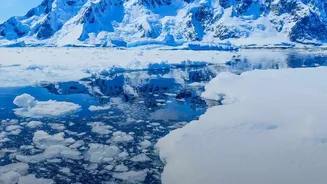
The loss of sea ice has profound global consequences. Sea ice acts like a vast, white shield, reflecting the sun's energy back into space. When it vanishes, the darker ocean water below is exposed, absorbing more heat and creating a feedback loop that accelerates warming. Furthermore, this floating ice serves as a protective barrier for the colossal ice shelves that fringe the Antarctic continent. Without it, these shelves are exposed to wave action, which can weaken them and speed up the flow of land-based glaciers into the ocean — the primary driver of global sea-level rise. The entire marine ecosystem is also at risk. Species from microscopic algae to krill, penguins, and seals depend on the sea ice for habitat, breeding, and food.
A 'Now Problem'
For years, scientists were cautious about linking Antarctic sea ice variability directly to climate change. The system's natural swings made it difficult to pinpoint a clear trend. However, the persistence of these record-breaking lows has changed the conversation. Experts now refer to the situation as a 'now problem,' indicating that the impacts are no longer a distant forecast but a present-day reality. The question is no longer if Antarctica is responding to a warming planet, but how rapidly and with what consequences. As one expert noted, the fact that we are seeing low winter after low winter is a very clear indication that the system has changed.