






A New Eye in the Sky
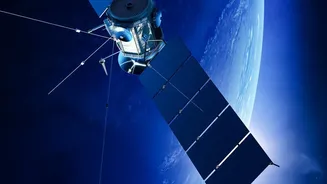
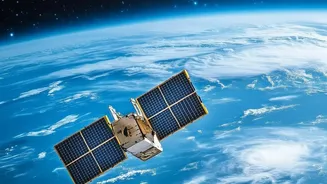
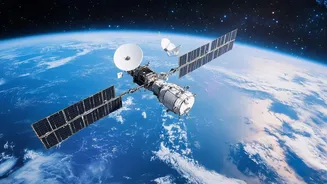
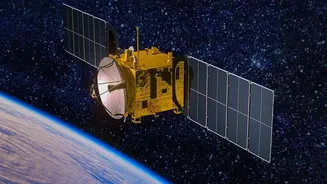
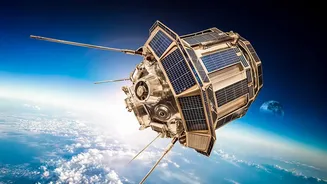
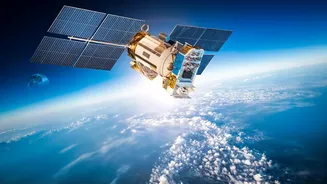
For decades, observing Earth from space was the exclusive domain of powerful nations and their spy agencies. That era is definitively over. Today, low Earth orbit is bustling with constellations of small, powerful satellites operated by private companies
like Planet, Vantor (formerly Maxar), and Airbus. These commercial fleets have radically changed the game. Instead of a single satellite passing over a location occasionally, companies like Planet now image the entire landmass of the Earth every single day. This leap in frequency, combined with ever-improving image resolution, means that changes on the ground—from new construction and deforestation to the movement of ships—can be tracked with unprecedented persistence. The sheer volume of imagery being collected is staggering, creating a continuous, high-definition chronicle of our planet.
AI: The Brain That Makes Sense of the Data
The torrent of data from these satellites would be useless without a way to analyze it. This is where artificial intelligence becomes the second key part of the revolution. It's impossible for humans to manually sift through millions of images a day. Instead, sophisticated AI and machine learning algorithms do the heavy lifting. These systems can be trained to automatically detect specific objects and patterns, such as counting cars in a retail parking lot to predict quarterly earnings, identifying ships engaging in illegal fishing, or mapping the extent of flood damage after a storm. Some companies are even deploying AI directly on their satellites, allowing for real-time analysis in orbit before the data is ever sent to the ground. This combination turns raw pixels into actionable intelligence, a market that is growing at over 14% annually.
The Promise: A More Transparent World
The applications for this technology are transforming industries. In agriculture, satellite data helps create precision farming techniques, optimizing water and fertilizer use. Insurers can more quickly assess damage and pay claims after natural disasters. Financial traders use the data to gain an edge by monitoring economic activity, while environmental groups can track deforestation and carbon emissions with greater accuracy. For disaster response and humanitarian aid, the ability to have a near-instant view of a crisis zone is invaluable for directing resources. Proponents argue this technology creates a more transparent world, holding governments and corporations accountable for their actions by making it harder to hide things from view.
The Peril: The Governance Gap
This newfound power comes with significant challenges. A key issue is that the technology is inherently dual-use; the same satellite that monitors crops can also track troop movements. This creates complex national security dilemmas. Governments like the United States regulate their domestic companies, sometimes implementing 'shutter control' to restrict imagery over sensitive areas during a conflict. However, they cannot regulate foreign companies, creating a global market where it's difficult to control who sees what. This raises profound questions about privacy and surveillance. With commercially available imagery becoming sharp enough to monitor individual properties, the line between public observation and intrusive surveillance is blurring, and existing laws written for a pre-digital age are struggling to keep up.
The Search for Rules
The core problem is a governance vacuum. International space law, like the Outer Space Treaty of 1967, was designed for nation-states, not agile tech startups. There is no global consensus on the rules for commercial remote sensing. Who is liable if misinterpreted AI data leads to a financial crash or a military miscalculation? How do we balance the immense commercial and scientific benefits with the legitimate need for national security and personal privacy? As organizations like the OECD have highlighted, building trust is essential, but that trust can be easily eroded by the spread of digitally altered or misrepresented satellite imagery. The debate is no longer just about technical capabilities, but about establishing ethical and legal guardrails for this powerful technology before it completely outpaces our ability to manage it.