

Living History, Not Just Museums
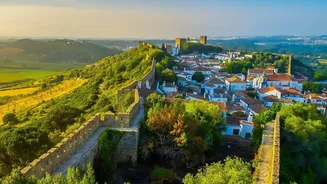
While urban centres house magnificent museums, the Portuguese countryside offers something more immersive: living history. Take the 'Aldeias Históricas', a collection of twelve fortified villages near the Spanish border. Places like Monsanto, with its
houses built into giant granite boulders, or the perfectly preserved medieval layout of Sortelha, are not roped-off exhibits. People still live and work here, their daily lives unfolding amidst centuries-old stone walls and cobblestone lanes. This offers a chance to experience heritage not as a relic of the past, but as a continuous, evolving story. Some of these villages, including Castelo Rodrigo, Castelo Novo, and Sortelha, have even been recognised by the UNWTO as among the 'Best Tourism Villages' in the world for their commitment to preserving their cultural legacy while promoting sustainable tourism.
Castles Beyond the Crowds
Portugal is dotted with hundreds of castles, but many of the most famous, like those in Sintra or Lisbon, are major tourist hotspots. The countryside, however, is home to equally impressive fortifications that you can often explore in relative peace. The Alentejo region, for instance, boasts spectacular hilltop castles like Marvão, which offers breathtaking views from its formidable walls, and the medieval village of Monsaraz, overlooking the vast Alqueva Lake. These structures were often the first line of defence against invaders and tell a raw story of conflict and resilience. Exploring them allows for a more personal and contemplative connection with Portugal’s long and layered history, from Roman foundations to Moorish ramparts and Reconquista strongholds.
A Landscape of Ancient Legacies
The heritage of rural Portugal is intrinsically linked to its diverse landscapes. In the Alentejo, one of Europe's largest collections of prehistoric megalithic sites lies scattered across the vast, sun-drenched plains. Monuments like the Almendres Cromlech predate Stonehenge, offering a profound glimpse into early human society. Further north, the Douro Valley, a UNESCO World Heritage site, tells a story of viticulture, with its dramatic terraced vineyards carved by hand over centuries. Meanwhile, the mountains of Central Portugal hide the unique Schist Villages ('Aldeias do Xisto'), where houses made of local stone blend almost seamlessly into the natural environment. These landscapes are not just backdrops; they are the primary documents of a culture shaped by the land itself.
Heritage You Can Taste and Touch
A rural heritage trip engages all the senses. Gastronomy here is not an afterthought; it is a central pillar of the culture. In the Alentejo, you can taste wines made in enormous clay pots ('talhas'), a technique dating back to Roman times. In the Serra da Estrela mountains, you can meet shepherds and learn about the production of the region's famous cheese. This extends to crafts as well. From the 'figura' clay dolls of Barcelos to the wool rugs of Arraiolos and the hammered copper cataplanas of the Algarve, rural Portugal is a hub for artisans preserving centuries-old techniques. Engaging with these traditions—tasting the food, meeting the makers, and perhaps even trying your hand at a craft—provides a tangible link to the country's soul that is hard to find in a typical city tour.