






A Shocking Admission
The message from Volkswagen's leadership has become brutally honest. VW Group CEO Oliver Blume recently told shareholders that the company’s long-successful business model of developing cars in Germany, producing them in Europe, and selling them globally
“no longer works today.” This stark admission comes as the company faces a perfect storm: intense competition, shrinking market share in key regions, and massive cost pressures. The situation has prompted the launch of an aggressive performance program, with executives stating that the planned cost reductions are not enough and that a fundamental transformation of the business is required to avoid putting the company's future at risk.
The Cracks in the Foundation
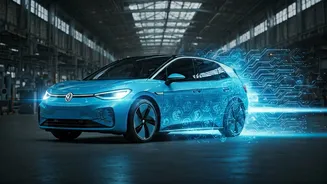
Two major problems lie at the heart of VW's crisis. First is its struggle in China, a market that was once a guaranteed source of profit. Having been the top-selling carmaker there for years, VW has been pushed down the rankings by nimble Chinese EV manufacturers like BYD. These local rivals are winning over customers with advanced software, faster development cycles, and designs more attuned to local tastes. Simultaneously, Volkswagen has been plagued by its own internal software issues. Its dedicated software unit, Cariad, has been beset by delays and struggles to compete, even leading the company to end a major automated driving partnership with Bosch after investing heavily in the project. Even basic interior design choices, like unpopular touch-sensitive controls, have frustrated loyal customers, with brand CEO Thomas Schäfer admitting they “definitely did a lot of damage.”
The ‘Road to 6.5’ Turnaround Plan
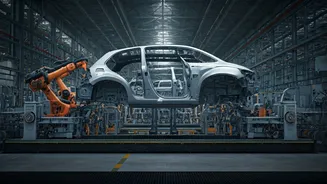
In response, Volkswagen has launched a massive global performance program named “Accelerate Forward | Road to 6.5.” The name refers to its primary goal: to achieve a sustainable operating return on sales of 6.5 percent by 2026, a target described as “very ambitious.” This plan aims to improve earnings by around 10 billion euros by focusing on several key areas. The company plans to slash costs, reduce the complexity of its model lineup to focus on core, high-volume vehicles, and drastically speed up development times for new models from 50 months down to 36. This overhaul also involves significant personnel reductions, with reports of up to 100,000 job cuts globally and potential plant closures in Germany, representing one of the deepest restructurings in its history.
A New Strategy for China
Recognizing its failures in the world's largest auto market, Volkswagen is implementing an “In China, for China” strategy. This involves building its largest research and development center outside Germany in Hefei, China, to better tailor vehicles to local preferences. The company is also deepening its ties with Chinese tech partners to accelerate development and gain a competitive edge. In a significant strategy shift, VW is even considering importing cars developed and built in China to Europe or manufacturing those China-developed models in its underutilized European plants. This would have been unthinkable just a few years ago and highlights the dramatic power shift underway in the global auto industry.
Can the Titan Learn to Dance?
The question now is whether this colossal restructuring will be enough. The challenges are not merely financial or operational; they are cultural. Volkswagen is attempting to transform from a slow, methodical, hardware-focused manufacturer into a nimble, software-savvy tech company. This pivot requires a complete change in mindset and corporate DNA. Labour unions have already voiced strong opposition to the scale of the proposed job cuts and plant closures. Meanwhile, investors are watching nervously, with the company's stock price falling amid the uncertainty. Some analysts question whether cost-cutting alone can solve the underlying problem, arguing that VW must first and foremost bring attractive, in-demand products to the market.