




The Dawn of Autonomous Spacecraft
For decades, space missions have been a hands-on affair, with ground crews meticulously planning every maneuver. But as the space sector grows exponentially, this model is becoming unsustainable. Enter AI-led operations. This refers to the use of artificial
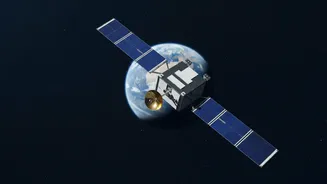
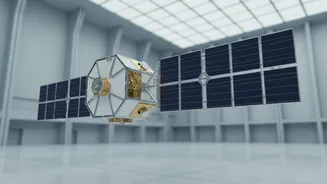
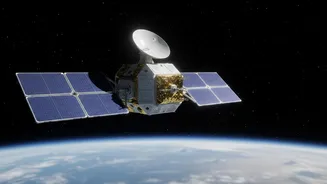
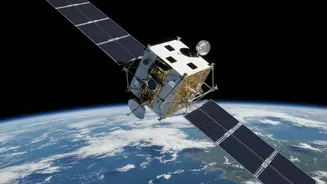
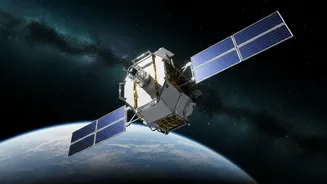
intelligence to automate and support mission tasks like satellite health monitoring, data analysis, navigation, and collision avoidance. Instead of waiting for commands from Earth, which can be delayed by minutes or even hours for deep-space missions, AI-powered spacecraft can make certain decisions independently. This shift is driven by necessity: with satellite mega-constellations growing into the thousands and missions becoming more complex, AI offers a way to manage the workload efficiently and respond to events faster than human operators ever could. The goal isn't to create sentient spaceships, but to use specialised, or 'narrow', AI to handle specific, demanding jobs.
Why Autonomy is Critical for Modern Missions
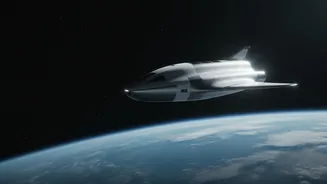
The push for greater autonomy in space is about more than just efficiency; it's about capability. For missions far from Earth, like those to Mars or beyond, the communication lag makes real-time human control impossible. An autonomous system can react instantly to unforeseen obstacles like space debris or seize a fleeting scientific opportunity without waiting for a go-ahead from mission control. AI is also crucial for predictive maintenance, constantly monitoring a spacecraft's systems to flag potential failures before they happen, which is vital when a repair crew is millions of kilometers away. This is especially important for managing large satellite constellations in low-Earth orbit, where AI can automate scheduling, optimise communications, and perform collision avoidance maneuvers, tasks that would be overwhelming for human teams.
The Indispensable Human in the Loop
Despite the rise of onboard AI, human oversight remains non-negotiable. The prevailing model is not about replacing human operators but augmenting them. Experts distinguish between a 'human-in-the-loop' model, for operations where real-time intervention is possible, and a 'human-on-the-loop' model for deep space missions, where humans set the rules and review actions later. This oversight is essential for several reasons. AI systems operate based on the data they're trained on and can struggle with completely novel situations. A human operator provides context, strategic judgment, and accountability—especially when critical decisions are needed. The history of technology is filled with examples where a human's gut instinct correctly overruled a faulty automated system, a principle that holds true from nuclear alert systems to space operations. Ultimately, humans are responsible for the mission's ethical and strategic direction.
Inside SMOPS-2026: A Glimpse into the Future
The International Conference on Spacecraft Mission Operations (SMOPS-2026), held in Bengaluru, is a key forum for space agencies, startups, and industry leaders to shape the future of these operations. A major theme of the conference is leveraging innovative technologies like AI for smarter and more sustainable space mission management. Discussions at SMOPS focus on the practical application of these concepts, from managing large constellations to automation in ground stations and human spaceflight. This is where the theoretical meets the practical, as experts hash out the challenges of deploying AI in the harsh environment of space, where radiation, extreme temperatures, and limited computing power are major hurdles. Recent breakthroughs, like the US Air Force's successful demonstration of a neural network controlling a satellite's attitude in orbit, show that these challenges are being overcome, turning conference discussions into real-world capabilities.
From Orbit to Earth: The Broader Impact
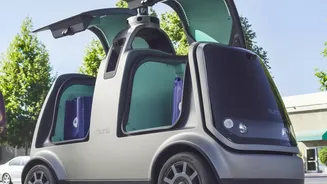
The development of AI-led space operations has implications that extend far beyond the final frontier. The same AI that helps satellites analyze Earth observation data—for example, to monitor climate change or track natural disasters—is also filtering that data onboard so that only the most relevant information is sent back, easing the data bottleneck. The technologies refined for autonomous spacecraft navigation and resource management could find applications in autonomous shipping, logistics, and managing critical infrastructure on Earth. Furthermore, the need for robust, trustworthy AI that can operate in high-stakes environments is pushing the entire field forward, with an emphasis on explainability and safety. As we build systems that can be trusted to guide a multi-million dollar spacecraft, we are also creating a blueprint for responsible AI deployment in other critical sectors.