



The World's Most Important Chokepoint
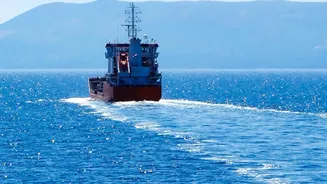
At its narrowest, the Strait of Hormuz is just 54 kilometres wide, a slender channel connecting the Persian Gulf to the open ocean. Despite its small size, its importance is immense. Before the disruptions of 2026, roughly a quarter of all seaborne oil
and about 20% of the world's Liquefied Natural Gas (LNG) passed through this chokepoint daily. Producers like Saudi Arabia, the UAE, Iraq, Kuwait, and Qatar depend on it as their primary route to global markets. A huge portion of this traffic, around 80% of the oil, was destined for Asia, making countries like China and India profoundly dependent on the strait's stability. The term 'pre-war' serves as a crucial benchmark, highlighting a period when this vital artery functioned at full capacity, underpinning a delicate global economic balance that has since been shattered.
Oil: The Global Economy's Lifeblood
Before the conflict, an average of 20 million barrels of crude oil and petroleum products flowed through the strait every day. This staggering volume represented about one-fifth of the entire world's daily oil consumption. For India, the strait was indispensable. Before the crisis, around 45% of India's crude oil imports transited through Hormuz. Any disruption here has an immediate and direct impact, causing shipping and insurance costs to soar and, ultimately, affecting prices at the pump for Indian consumers. The pre-war flow of oil was a constant, predictable stream that energy markets were built upon. Its disruption has sent shockwaves through the global economy, forcing nations to dip into strategic reserves and scramble for alternative, more expensive sources.
LNG and LPG: Fueling Homes and Industries
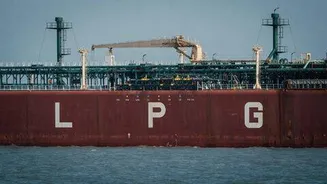
The strait was also a critical corridor for natural gas, in both liquefied (LNG) and petroleum (LPG) forms. Qatar, one of the world's largest LNG exporters, sent nearly all of its shipments through Hormuz, accounting for a massive share of global supply. India was a major destination for this LNG, which is essential for power generation, industrial processes, and city gas networks. Before the crisis, half of India's LNG imports came via this route. Equally important was LPG, the cooking gas used in millions of Indian households, particularly under the Ujjwala scheme. An astounding 90% of India's LPG imports passed through the Strait of Hormuz. The pre-war traffic data shows a deep reliance that left India's residential and industrial energy security highly vulnerable to any instability in the region.
Fertilisers: The Hidden Link to Food Security
Perhaps the least understood, but most critical, commodity flowing through Hormuz was fertiliser. The Persian Gulf is a major production hub for nitrogen-based fertilisers like urea and ammonia, thanks to the region's abundant natural gas. Estimates suggest that before the conflict, up to a third of the world's seaborne fertiliser trade transited the strait. This included as much as two-thirds of the global trade in urea, the world's most common nitrogen fertiliser. For an agricultural nation like India, a stable supply of fertiliser is not a luxury; it is a prerequisite for food security. A disruption in the flow from the Gulf can lead to higher prices for farmers, reduced crop yields, and ultimately, a threat to the nation's food supply chain. The steady stream of these nutrients through Hormuz was a hidden pillar supporting global agriculture.