




What is the Bharatiya Antariksha Station?
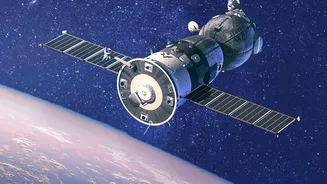
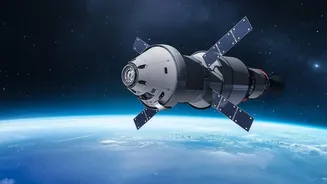
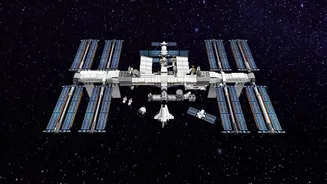
The Bharatiya Antariksha Station, or BAS, is India's answer to the International Space Station (ISS). It is a planned modular space station that will orbit the Earth at an altitude of about 400-450 kilometres. This ambitious project by the Indian Space Research
Organisation (ISRO) is envisioned as a five-module orbital laboratory. Once fully assembled, it is expected to weigh around 52 tonnes and will be able to host three to four astronauts for long-duration stays of three to six months. The station will serve as a hub for advanced scientific research in a microgravity environment, allowing for experiments in biology, material science, and medicine that are not possible on Earth. It represents a major leap in India's space capabilities, aiming to establish a continuous human presence in space.
A Major Milestone: Subsystem Design Explained
The recent announcement that ISRO has started designing critical subsystems is a significant step forward. After completing the 'Baseline Design Review,' which is like finalising the master blueprint, engineers can now focus on the nitty-gritty details. 'Subsystems' are the essential components that make the station function. This includes the Environmental Control and Life Support System (ECLSS), which will manage the air, water, and temperature for the crew. It also involves designing the power systems to generate and distribute electricity, the propulsion systems to maintain orbit, and the crucial docking and berthing mechanisms that will allow spacecraft to connect with the station. Starting this phase means the project is moving from theoretical drawings to the practical engineering of the hardware that will one day fly in space.
Building on the Gaganyaan Foundation
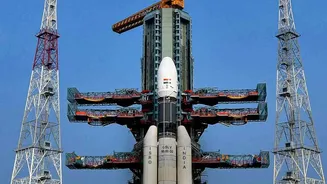
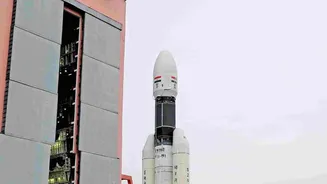
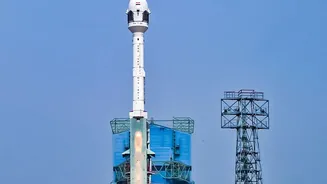
The Bharatiya Antariksha Station is not being built in a vacuum; it's the next logical step after the Gaganyaan mission, India's first human spaceflight programme. Gaganyaan is the crucial stepping stone, as it is developing the foundational technologies needed to safely send humans to space and bring them back. This includes the powerful Human Rated Launch Vehicle (HLVM3), the crew module, and life support systems. The experience gained from the Gaganyaan missions, including rendezvous and docking capabilities, will be directly applied to the construction and operation of the space station. In essence, Gaganyaan validates India's ability to manage human spaceflight, while the BAS will expand that capability into a long-term presence in orbit.
The Road to 2035: Timeline and Phases
ISRO has laid out a phased timeline for this monumental project. The first piece of the puzzle, a module known as BAS-01, is scheduled for launch by 2028. This initial module will serve as the foundation and will be a test bed for many of the station's core technologies. Following this, additional modules will be launched over the subsequent years, each adding new capabilities. The entire five-module station is planned to be fully assembled and operational by 2035. This modular approach allows ISRO to manage the enormous technical and financial undertaking in manageable steps, ensuring that each phase is successful before moving on to the next.
More Than Just a Symbol: The Station's Purpose
Having its own space station is a matter of national pride, but its purpose goes far beyond symbolism. The BAS will be a cutting-edge scientific laboratory. It will provide Indian scientists with a unique platform for microgravity experiments, which can lead to breakthroughs in medicine, materials manufacturing, and fundamental physics. Strategically, it secures India's place among the elite group of nations with independent space station capabilities, currently only including the US (as part of the ISS), Russia, and China. The station will also spur innovation within Indian industry and academia, creating high-tech jobs and boosting the domestic space ecosystem. It is a long-term investment in India's scientific and technological future.