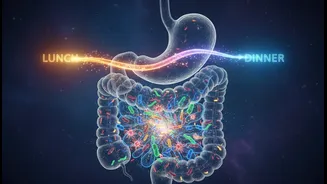










The Gut-Brain Superhighway
You’ve probably experienced butterflies in your stomach before a big event or a gut-wrenching feeling during a stressful moment. These aren't just figures of speech; they're real-time examples of the gut-brain axis at work. This is a complex, two-way
communication network connecting your brain and your gastrointestinal tract. This highway is made up of millions of nerve cells, with the vagus nerve acting as a primary channel, sending signals in both directions. But it's not just nerves; your gut also produces a vast amount of the body's neurotransmitters, the chemical messengers that regulate emotions. In fact, an estimated 90-95% of your body's serotonin, often called the 'feel-good' chemical, is produced in the gut, not the brain. When this system is out of balance, it can affect not just your digestion, but your mental state, too.
Your Stool as a Daily Report Card
It might not be dinner-table conversation, but paying attention to your bowel movements is one of the most direct ways to get feedback on your internal health. Think of your stool as a daily report card for your digestive system. Its characteristics can offer clues about your diet, hydration, and the presence of inflammation or infection. To help standardize these observations, healthcare providers often use the Bristol Stool Chart. This simple tool classifies human feces into seven types based on shape and consistency, ranging from hard, separate lumps (constipation) to entirely liquid (diarrhea). The shape of your stool is largely determined by how long it spends in your colon; the longer it stays, the more water is absorbed, leading to harder stools. Consistently falling at either extreme of the chart can be a sign that something is amiss.
Decoding Consistency and Frequency
Ideally, a healthy stool is soft, well-formed, and easy to pass, typically corresponding to Types 3 and 4 on the Bristol Stool Chart. When you veer into Types 1 or 2, which are hard and lumpy, it often indicates constipation. This can be caused by dehydration, low fibre intake, or lack of physical activity. Behaviourally, this sluggishness in your gut can mirror feelings of lethargy, fatigue, and irritability. On the other end, Types 5, 6, and 7 represent increasingly loose stools or diarrhea. This suggests that food is moving too quickly through your system, which can be due to infections, food intolerances, or conditions like Irritable Bowel Syndrome (IBS). This rapid transit can lead to poor nutrient absorption, which in turn can cause brain fog and fatigue, while the underlying inflammation can trigger anxiety.
The Significance of Colour
While consistency is a key indicator, colour can also provide important information. A normal, healthy stool is typically brown, a result of bile produced by the liver. However, other colours can appear for various reasons. Green stools can be caused by eating leafy greens or by food moving too quickly through the intestines. Yellow, greasy-looking stools might suggest your body is struggling to absorb fat. More concerning colours include black or bright red, which can indicate bleeding in the gastrointestinal tract and warrant immediate medical attention, although they can also be caused by iron supplements or certain foods like beetroot, respectively. Pale or clay-coloured stools can signal a problem with your liver or bile ducts. Each of these can be linked to underlying issues that also affect energy levels and mood.
When Behaviour Is the Loudest Signal
Sudden or persistent changes in your mood, energy, or ability to focus shouldn't be ignored, especially if they coincide with digestive issues. An imbalance in your gut microbiome, known as dysbiosis, can lead to chronic inflammation. This inflammation doesn't just stay in the gut; it can trigger a body-wide immune response that affects the brain, contributing to conditions like anxiety and depression. People with digestive conditions like IBS frequently experience higher rates of anxiety and depression, demonstrating just how interconnected these systems are. If you notice you’re feeling unusually anxious, irritable, fatigued, or are suffering from brain fog, and these feelings are accompanied by a shift in your bowel habits—be it constipation, diarrhea, or bloating—it's a clear signal that your gut health may be playing a significant role.