






The Heart of the Agnibaan Rocket
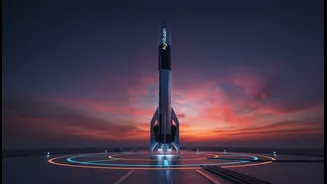
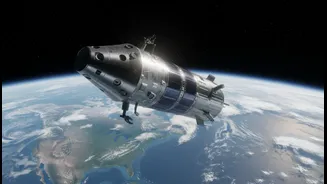
At the core of Agnikul's strategy is the Agnibaan, a highly customizable small-lift launch vehicle designed to carry payloads of up to 300 kg into orbit. Powering this rocket is a family of groundbreaking engines, most notably the Agnilet and the Agnite.
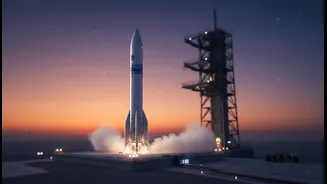
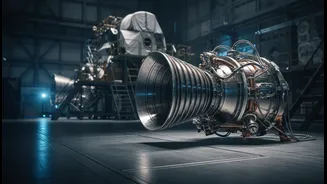
What makes these engines remarkable is not just their power but how they are made. The Agnilet, for instance, is the world's first single-piece 3D-printed rocket engine to be used in a flight. This engine was the star of the show during Agnikul's successful suborbital test flight (SOrTeD) on May 30, 2024, which marked India's first launch from a private pad and its first flight powered by a semi-cryogenic engine.
Why 3D Printing Changes Everything
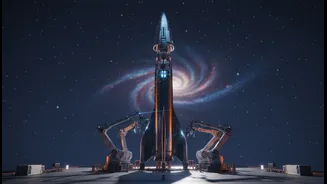
Traditionally, manufacturing a rocket engine is a painstaking process. It involves fabricating hundreds, sometimes thousands, of individual components that must be perfectly welded and assembled. This process is slow, expensive, and leaves room for error. Agnikul has turned this model on its head by using additive manufacturing, or 3D printing. The company can now print an entire engine, like the one-meter-long Agnite, as a single piece of hardware in a matter of days. This drastically reduces production time from months to mere days, cuts down on material waste, and eliminates the risks associated with complex assembly and welding. By fabricating an engine from a high-performance nickel-chromium alloy in as little as 72 hours, Agnikul is building a foundation for rapid, on-demand rocket assembly.
The 'Semi-Cryo' Advantage
The term "semi-cryogenic" refers to the engine's fuel. It uses a combination of liquid oxygen (LOX), which is stored at cryogenic temperatures (-183°C), and a refined kerosene that is liquid at room temperature. This combination is more stable and easier to handle than fully cryogenic systems that use liquid hydrogen, which is highly volatile. For a commercial launch provider aiming for quick turnaround times, using semi-cryogenic propellants offers a significant operational advantage. It provides a powerful and efficient performance profile without the extreme handling complexities of fully cryogenic systems, making it a pragmatic choice for the small satellite launch market.
From Test Flights to Orbital Clusters
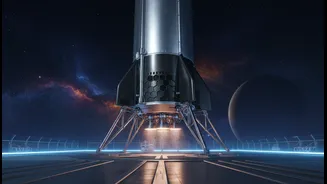
Agnikul's journey has been one of steady, calculated progress. After the successful SOrTeD mission in 2024, the company, which was incubated at IIT Madras, has focused on scaling its propulsion technology. A key part of the Agnibaan rocket's design is its modularity, which relies on clustering multiple engines to achieve the required thrust for different payloads. In 2026, Agnikul has demonstrated this capability by successfully test-firing clusters of first three, and then four, of its semi-cryogenic engines simultaneously. These tests are vital because they prove the in-house software and hardware can perfectly synchronize multiple engines, a non-negotiable requirement for a reliable orbital launch.
What's Next for Agnikul?
With the single-engine flight and multi-engine ground tests successfully completed, Agnikul is on a clear path toward its first orbital launch. The company's upcoming technology test will be another critical step in validating the entire launch system. The headline achievement—powering a launch vehicle with an engine that came off a 3D printer just days earlier—is set to become the new standard. This capability, supported by authorizations from IN-SPACe and collaborations with ISRO, positions Agnikul as a formidable player in the global small satellite launch market. As they move towards a scheduled orbital launch, they are not just building rockets; they are building a new paradigm for accessing space from India.