









The Soul of the Bobber
First, let’s talk about what makes a bobber. Born after World War II, the style is rooted in a 'less is more' philosophy. Riders would strip their bikes of anything non-essential—chopping (or 'bobbing') the fenders, removing the front fender entirely,
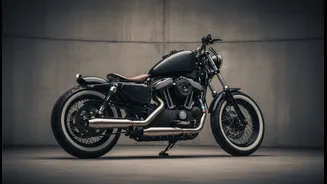
and ditching passenger seats for a solo saddle. The goal was to reduce weight and create a raw, minimalist machine that was all engine, frame, and attitude. Unlike flashy choppers, which often feature radically altered frames, bobbers typically maintain the stock frame geometry, focusing instead on creating clean lines and a muscular, grounded stance. This aesthetic prizes mechanical simplicity, exposing the craftsmanship of the bike's core components.
An Introduction to the 2-into-1 Exhaust
Enter the two-into-one exhaust. As the name implies, this system collects the exhaust gases from a V-twin engine's two cylinders into two separate header pipes that merge into a single collector and exit through one muffler. This is a distinct contrast to the classic 'true dual' or 2-into-2 setup, where each cylinder has its own independent pipe running the length of the bike, creating a symmetrical look. While dual exhausts are iconic, particularly on classic cruisers, the 2-into-1 design offers a completely different set of advantages in both performance and aesthetics.
Creating a Cleaner Profile
This is where the magic happens for a bobber build. By routing both pipes to one side, a 2-into-1 exhaust creates a significant area of negative space on the other. This asymmetry is a powerful design choice. It declutters the bike's profile, opening up the view and drawing the eye to the engine and the rear wheel. On a bobber, where the engine is the jewel and the stripped-down frame is the setting, this is a perfect match. The single, consolidated pipe looks lean and athletic, reinforcing the minimalist ethos. While a dual exhaust creates balance, the 2-into-1 creates focus, which is precisely what a purposeful bobber aims for. The result is a cleaner, tighter, and more aggressive silhouette.
More Than Just a Pretty Pipe
The “purposeful” part of the headline isn’t just about looks. Two-into-one systems are renowned for their performance benefits, particularly in the low-to-mid RPM range where most street riding happens. The magic is in the 'scavenging' effect: as the exhaust pulse from one cylinder travels down the pipe, it creates a vacuum effect in the collector that helps pull the exhaust from the other cylinder. This improved exhaust flow allows the engine to breathe more efficiently, resulting in better throttle response and a noticeable boost in torque. This performance gain, combined with the weight savings from having one less muffler, makes the bike feel more agile and responsive—a perfect complement to the bobber’s lightweight, performance-oriented roots. The sound is also distinct: often a deeper, throatier growl compared to the more traditional rumble of duals.
The 'Deadwood' Persona
The name 'Deadwood' evokes a sense of rugged history and rebellious spirit, which is fitting for the bobber style. In fact, Harley-Davidson recently announced a new model for 2026 named the Deadwood, a factory bobber inspired by the stripped-down bikes of the post-war era. This new bike itself embodies the principles of a clean, purposeful profile. Whether it's a garage-built project named Deadwood or a new factory model, the principle is the same. Fitting a 2-into-1 exhaust is a statement. It signals that the builder prioritized performance and a clean, uncluttered aesthetic over traditional symmetry. It transforms the bike from a standard cruiser into a finely honed machine where every part serves a distinct purpose, both visually and mechanically.