







Beyond the Boat Rides
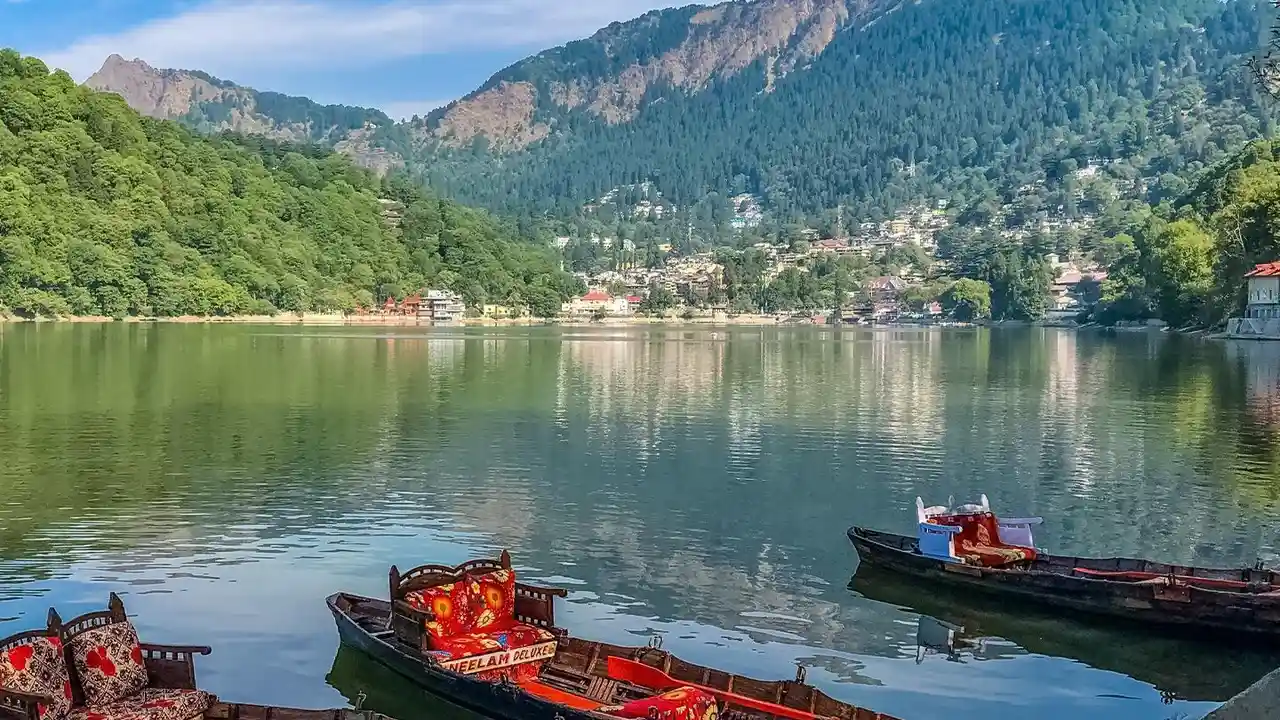
For many, a trip to Nainital is a whirlwind of boating on Naini Lake, shopping for candles on the Mall Road, and jostling for a view at Snow View Point. While these are all worthy experiences, they often miss the town's most subtle and rewarding feature:
its character. Founded in 1841 as a British hill station, Nainital was designed with the pedestrian in mind. Its core identity is etched into the stone facades of its colonial-era buildings, the winding paths that hug the hillsides, and the quiet corners that can only be reached on foot. To rush through Nainital is to see a postcard; to walk it is to read the letter. The town’s layout invites a slower pace, encouraging you to look up from the well-trodden path and appreciate the architectural details that tell the story of a bygone era.
The Tale of Two Roads
The 1.5-kilometre stretch of the Mall Road, officially named Govind Ballabh Pant Marg, is the town's main artery, connecting Mallital (the head of the lake) to Tallital (the foot of the lake). Walking along its lake-facing promenade is a quintessential Nainital experience. Here, grand colonial-era hotels stand shoulder-to-shoulder with modern storefronts. But for a truly architectural walk, one must pay attention to the details: the Gothic arches, the old-world verandahs, and the sturdy stone construction. For a quieter, more contemplative experience, the parallel Thandi Sarak, or 'Cold Road', offers a different perspective. This shaded, vehicle-free path on the opposite side of the lake provides stunning, crowd-free views of the town's entire architectural sweep, allowing you to see how the buildings are layered into the hillside. The walk here is cool, peaceful, and feels a world away from the bustle across the water.
A Sanctuary in the Wilderness
A short, uphill walk from the main town in Mallital leads to one of Nainital's earliest and most beautiful structures: St. John in the Wilderness Church. Established in 1844, this Anglican church is a magnificent example of Neo-Gothic architecture, nestled serenely among deodar trees. The church was named by the Bishop of Calcutta, Daniel Wilson, who had to stay in an unfinished hut in the forest while laying its foundation. Inside, the stained-glass windows, imported from Belgium, cast a colourful, sombre light. The quiet cemetery outside holds the graves of early European residents and a memorial to the victims of the catastrophic 1880 landslide that reshaped the town. Visiting the church requires a deliberate detour and a small climb, perfectly embodying the rewards of an unhurried itinerary.
The Ghost of the Raj
Nainital is dotted with historic bungalows and cottages that whisper tales of its colonial past. Perhaps none is more famous than Gurney House, the former residence of the legendary hunter-conservationist Jim Corbett. Located on the Ayarpatta slopes, a quiet walk from the Mall Road, the cottage is now a private residence but offers a glimpse into Corbett's life, preserving many of his belongings. The house itself, built in 1881 from the materials of a dismantled home, has a rustic, colonial charm. Another significant landmark is Raj Bhavan, the former Government House. Built in 1897 and designed in the Victorian Gothic style, it resembles a Scottish castle. While its vast estate is best appreciated with a formal visit, its imposing structure is a dominant feature of the town's architectural skyline and can be admired from various walking trails.