




A Groundbreaking Martian Weather Map
Scientists from the Physical Research Laboratory (PRL) in Ahmedabad have unveiled a detailed map of Mars's surface temperatures, revealing its surprisingly dynamic and violent climate. Published in the journal Current Science, their research offers new
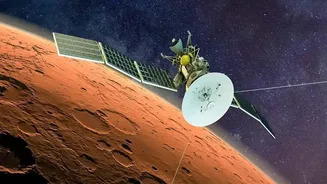
clues about how the Red Planet’s thin atmosphere behaves. The team analysed data from the Emirates Mars Mission's Hope spacecraft, focusing on two massive impact basins, Hellas and Argyre, to understand how Martian geography shapes its climate. This work isn't just an academic exercise; it’s a critical piece of the puzzle for planning safer and more effective missions to Mars.
Decoding the Red Planet’s Wild Swings
Mars experiences extreme temperature fluctuations, swinging from a relatively mild 27 degrees Celsius in summer to a bone-chilling minus 113 degrees Celsius in winter. These massive swings happen because Mars's atmosphere is about 100 times thinner than Earth's and can't effectively trap and distribute heat. The planet heats up rapidly in sunlight and cools down just as fast after sunset. The PRL scientists also identified large-scale temperature patterns that move like waves around the planet. These "zonal waves" are like ripples on a pond, giving an indirect view of the powerful atmospheric forces at play. The study found that the shape and depth of basins like Hellas and Argyre have a dramatic influence on these wave patterns, creating unique regional weather systems.
Why This Changes Everything for Mars Missions
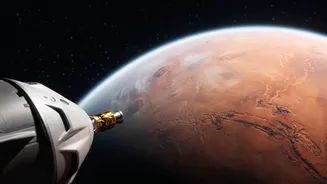
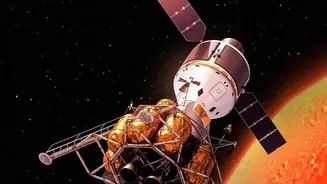
So, why does a better weather forecast for a planet millions of miles away matter so much? For any spacecraft attempting to land on Mars, the atmosphere is the biggest obstacle. A process called aerobraking—using atmospheric drag to slow down—is essential for a safe landing. However, unexpected changes in atmospheric density, driven by these temperature waves, can be catastrophic. If the atmosphere is denser than expected, a lander could burn up; if it's thinner, it could crash into the surface. This new research provides mission planners with a more accurate picture of Mars's atmospheric behaviour, allowing them to better predict landing conditions. It will help in selecting safer landing sites, designing more robust equipment that can withstand the thermal stress, and planning surface operations for future robotic and, eventually, human explorers.
India’s Growing Legacy in Space Science
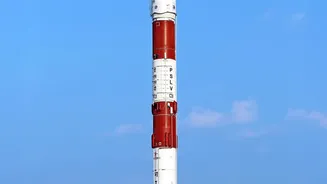
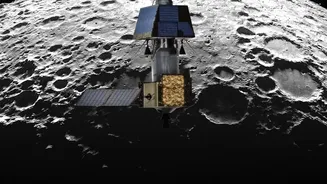
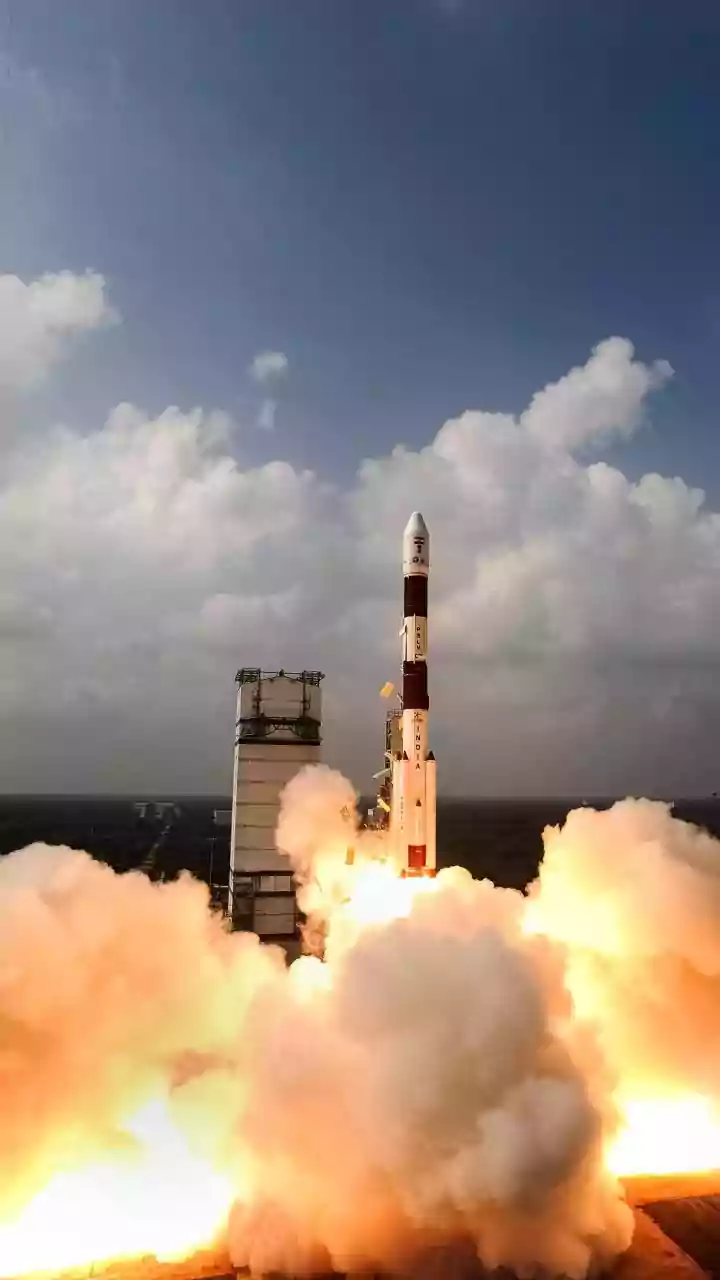
This latest discovery builds on India's impressive legacy in Mars exploration, which began with the celebrated Mars Orbiter Mission (MOM), or Mangalyaan. Launched by ISRO in 2013, Mangalyaan far exceeded its planned mission life, providing invaluable data on the Martian atmosphere for eight years. While this new study used data from an international mission, it highlights the continued leadership of Indian scientists in analysing and interpreting planetary data. Researchers at institutions like PRL are at the forefront of modelling Mars's complex systems, from its dust storms to its atmospheric loss. This work not only enhances our global understanding of the Red Planet but also solidifies India's position as a major player in space science and exploration, contributing vital knowledge for humanity’s next great adventure.