







From world wars to economic collapse, dire predictions for 2028 are circulating online, attributed to a figure dubbed 'America's Nostradamus'. But who is this modern prophet, and should we take these unverified claims seriously? Let's unpack it.
Who Is 'America's Nostradamus'?
The title
'America's Nostradamus' isn't officially held by one person but is a label the media and internet forums often apply to various figures. Recently, it has been most frequently associated with John Hogue, an author and prophecy expert who has spent decades studying the works of the 16th-century seer, Michel de Nostredame. Hogue has written several books interpreting Nostradamus's famously cryptic quatrains for a modern audience. Other figures, like prophecy teacher Perry Stone and political prognosticator Allan Lichtman, have also been given the 'Nostradamus' moniker, though their predictions differ in nature. Hogue's focus is on interpreting historical prophecies, Stone's are based on religious visions, and Lichtman uses a system of 'keys' to predict election outcomes, with his incorrect 2024 forecast drawing significant attention. For the 2028 claims gaining traction, Hogue is the central figure.
The Chilling 2028 Predictions
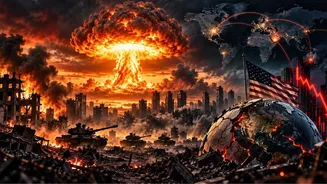
According to recent reports and interviews, John Hogue has outlined a series of catastrophic events he believes could unfold by 2028, based on his interpretation of Nostradamus's writings and astrological cycles. The predictions are alarming and include the collapse of the United States as a global superpower, both economically and politically. Hogue points to a two-year period from September 2026 to September 2028, which he calls the 'Shofar Silence,' as a window for this potential breakdown, marked by fuel shortages and crippling inflation. Furthermore, his forecast includes the risk of a new world war lasting 27 years, potentially sparked by the death of a figure he identifies from Nostradamus's texts as 'Mabus'. He has also warned that rising geopolitical tensions, particularly involving the US and Iran, create a 'Sword of Nuclear Damocles' hanging over humanity.
Fact-Checking the Prophecies
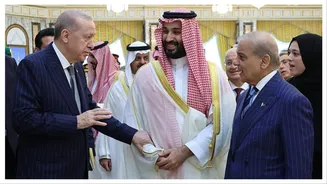
It is crucial to understand that these are interpretations, not established facts. Hogue himself frames them as warnings of what could happen if humanity continues on its current course, rather than an inevitable destiny. The source material—the writings of Nostradamus—is notoriously vague and has been interpreted countless ways over the centuries to fit various historical events after they've occurred. Hogue's identification of 'Mabus' as an anagram for Saudi Crown Prince Mohammed bin Salman (MBS) is a personal interpretation, not a direct translation. Similarly, the prediction of an American collapse is tied to Hogue's own astrological cycle theory. While issues like inflation and geopolitical tensions are real-world concerns, linking them to a 16th-century prophecy or a specific 2028 timeline is speculative and unverified.
The Psychology of Believing
So why do such predictions capture our imagination? The human brain is wired to seek patterns and avoid uncertainty. In times of global anxiety and rapid change, prophecies offer a sense of control or understanding, even if the outlook is grim. Believing in a prediction, however false, can make a chaotic world feel more manageable. This phenomenon is related to the 'self-fulfilling prophecy,' where a belief or expectation can influence behavior in a way that makes the outcome come true. For example, widespread panic about an economic collapse could lead to behaviors—like bank runs or selling off stocks—that could actually trigger a financial crisis. These predictions tap into our deep-seated need for answers, providing a narrative for our anxieties, regardless of their factual basis.
A Modern Twist on an Old Tradition
Prophets and seers have existed for millennia, but the internet has amplified their reach exponentially. While the original Nostradamus relied on the printing press, modern-day interpreters like Hogue have books, interviews, and viral social media posts to spread their warnings. These unverified claims can now circle the globe in minutes, often stripped of their original context. Many religious or eschatological predictions also point to 2028, often tying the date to the 80th anniversary of the founding of Israel in 1948 or other biblical calculations. This convergence of different prophetic traditions online creates a powerful echo chamber, making the date '2028' feel more significant than it might otherwise be.