





The Accidental Artist in Your Home
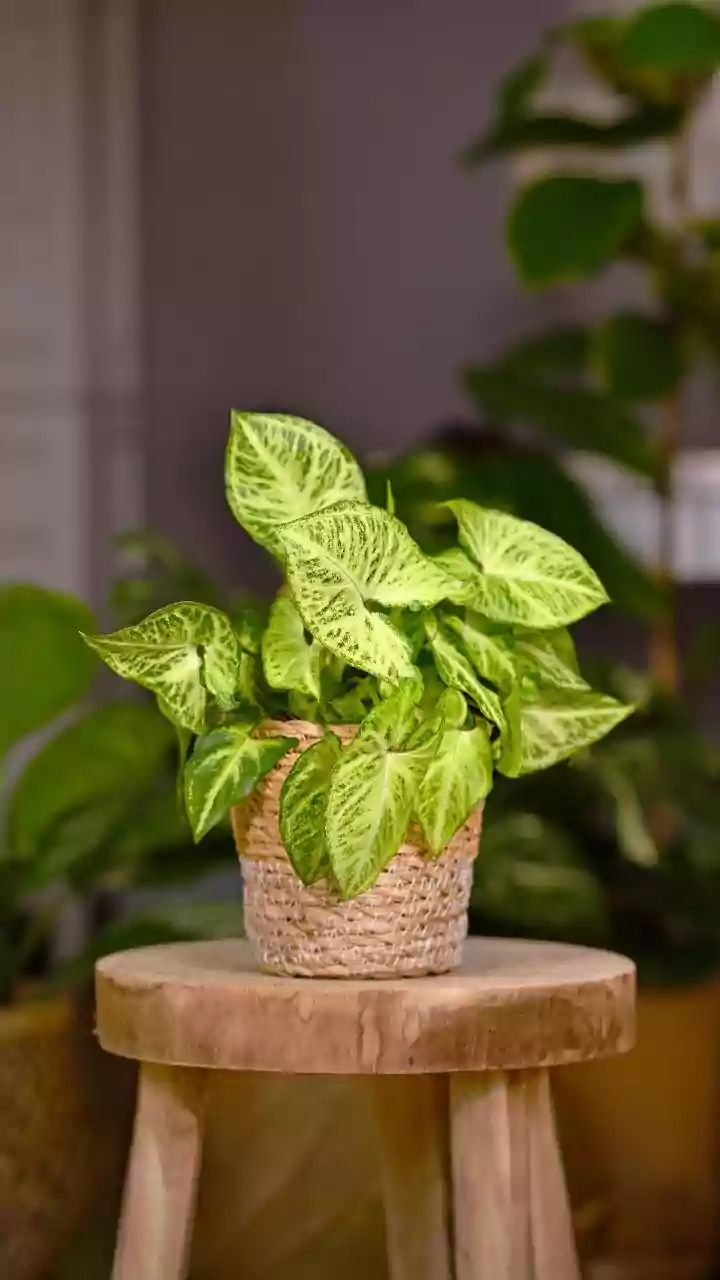
The Chinese Money Plant, or Pilea peperomioides, is one of India's most beloved houseplants, prized for its coin-shaped leaves and easy-going nature. It’s a common sight in homes and offices, adding a touch of green without demanding much in return. But
if you look closely at its leaves, you might notice something peculiar. The veins don't just branch out randomly; they form a network of looping, polygonal shapes. This isn't just a pretty design. Scientists have recently confirmed that this pattern is not random at all. It’s an example of nature solving a complex geometry problem, one that engineers and city planners use to design efficient systems.
What is a Voronoi Pattern?
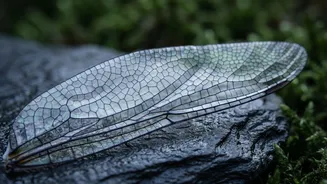
The pattern in question is called a Voronoi diagram. Imagine you have a map of a city with several libraries. A Voronoi diagram would divide the city into zones, where every point in a zone is closer to its designated library than to any other. The boundaries of these zones form polygons. Nature uses this same logic in various places, from the spots on a giraffe's coat to the cells in a dragonfly's wing. In the case of the Pilea leaf, tiny water-secreting pores called hydathodes act as the central points (the 'libraries'). The veins form the boundaries, creating a mosaic where each section of the leaf is served by its nearest pore. This creates a highly efficient system for distributing water and nutrients.
The Plant's Secret Algorithm
So how does a plant, with no brain or nervous system, create such a sophisticated pattern? The secret lies in a decentralised process governed by a plant hormone called auxin. This is an example of what scientists call emergent order, where complex patterns arise from simple, local rules. As the leaf grows, waves of auxin are thought to spread out from each hydathode. When the waves from two neighbouring pores meet, they collide and effectively cancel each other out. It is along these collision lines that the plant forms its veins. This simple mechanism of 'colliding waves' naturally creates the Voronoi pattern without any central instruction. The plant isn't calculating anything; it's simply following a local, chemical process that results in a globally efficient design.
Survival of the Smartest Arrangement
This mathematical elegance isn't just for show. It provides a significant evolutionary advantage. The arrangement of leaves on a plant, known as phyllotaxis, is crucial for survival. The primary goal is to maximise each leaf's exposure to sunlight for photosynthesis, the process of converting light into energy. An arrangement that causes leaves to excessively shade each other is inefficient and wastes resources. The Voronoi-like pattern within the leaf itself is an extension of this principle, ensuring that the internal network for transporting water and nutrients is as efficient as possible. One theory is that this pattern keeps the main veins, which transport water, a safe distance from the hydathodes, where water loss is highest, preventing dehydration. This robust system is so effective that research shows the pattern holds firm even when the plant is under stress from heat or intense light.
More Than Just a Pretty Plant
The discovery in the Chinese Money Plant is a beautiful reminder that complex, intelligent-seeming behaviour in nature often arises from simple, underlying rules. This principle, known as emergence, is also seen in the flocking of birds, the formation of ant colonies, and the crystallisation of snowflakes. None of these systems have a leader or a blueprint. Instead, order emerges from the interaction of individual components following basic instructions. It's a powerful concept that shows how nature can achieve incredible complexity and efficiency without a central controller. The unassuming houseplant on your desk is not just a piece of decor; it's a living example of a universal algorithm, a silent teacher of geometry, biology, and computer science all rolled into one.