






A Flawless Launch into The Night Sky
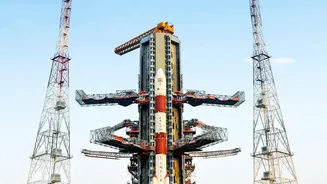
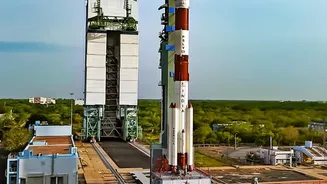
The Geosynchronous Satellite Launch Vehicle (GSLV-F17) lifted off from the Satish Dhawan Space Centre in Sriharikota in the early hours of the morning. The 51.7-metre-tall rocket, on its 19th flight, performed flawlessly. Approximately 18 minutes after
liftoff, it successfully placed the EOS-05 satellite into a sub-geosynchronous transfer orbit (sub-GTO). This precise injection into orbit marks a critical milestone, setting the stage for the satellite to begin its journey to its final operational altitude. The launch was not just a routine success; it represented the heaviest payload ever carried by a GSLV, weighing in at around 2,367 kg.
What is the EOS-05 Satellite?
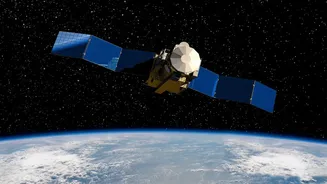
EOS-05 is a state-of-the-art Earth Observation Satellite, also known as GISAT-1A. It is India's first imaging satellite designed to operate from a geosynchronous orbit, roughly 36,000 kilometres above the Earth's surface. Unlike satellites in low-Earth orbit which pass over a location only periodically, EOS-05 will appear to remain stationary over a large region of the globe. This unique vantage point allows for near-real-time monitoring of the Indian subcontinent and its surrounding oceans. Its applications are vast, ranging from strategic surveillance to disaster management, tracking weather systems like cyclones, monitoring forest fires, and assessing agricultural health.
The Powerhouse GSLV Rocket
The GSLV is a three-stage rocket that has become a reliable workhorse for ISRO, especially for launching heavier satellites. The first stage consists of a solid-propellant core motor and four liquid-fueled strap-on boosters. The second stage uses a high-thrust liquid engine. The crucial third stage is the indigenous Cryogenic Upper Stage (CUS), which burns super-cooled liquid hydrogen and liquid oxygen. Mastering cryogenic technology is a major technical feat, as it provides high efficiency needed to propel heavy payloads to high-altitude orbits. The consistent performance of the GSLV, especially with its indigenous cryogenic stage, demonstrates India's self-reliance in complex launch technologies.
From Transfer Orbit to Final Destination
Placing the satellite into a sub-GTO is only the first step. This elliptical orbit is an intermediate 'parking' spot. Over the next few days and weeks, ISRO's ground stations will conduct a series of complex manoeuvres. Using its own onboard propulsion system, the satellite will fire its Liquid Apogee Motor (LAM) engine multiple times to gradually raise its orbit and circularise it at the target altitude of approximately 36,000 km. This method is more fuel-efficient for the launch vehicle, allowing it to carry a heavier satellite. Once in its final geostationary orbit, EOS-05 will undergo health checks before beginning its operational mission.
Why This Mission is Strategically Important
The successful launch of EOS-05 is a significant boost for India's strategic and developmental capabilities. Having a persistent 'eye in the sky' enhances national security by providing continuous surveillance over border areas and regions of interest. For civilian purposes, it revolutionises disaster management by enabling near-constant tracking of rapidly evolving events like floods and cyclones, allowing for more effective and timely responses. It also provides invaluable data for agriculture, urban planning, and environmental monitoring, contributing to the nation's economic growth and sustainable development. This mission cements India's position as a major spacefaring nation with a mature and reliable launch capability.