







Understanding Coordination and Rhythm
Before comparing, it’s important to understand what 'coordination' truly means in fitness. It’s the body's ability to perform smooth and efficient movements, involving the seamless collaboration of your brain, nervous system, and muscles. This can be
broken down further into aspects like balance, timing, and proprioception—your body's awareness of its position in space. Movement rhythm is the cadence and timing that govern these actions. Both running and jumping rope are fundamentally rhythmic, but the nature of their rhythms is where the key differences lie.
The Rhythmic Demands of Running
Running is essentially a series of controlled, single-leg landings and propulsions. Its rhythm is primarily horizontal and continuous. The main coordination challenge in running is maintaining dynamic stability while moving forward. Your arms swing to counterbalance your legs, your core engages to prevent excessive rotation, and your feet and ankles constantly adjust to the terrain. This develops a specific type of coordination geared toward locomotive efficiency—the ability to maintain form, balance, and forward momentum over distance. It hones your body's ability to repeat a consistent movement pattern thousands of times, making subtle adjustments to preserve energy and stability.
The Unique Challenge of Jumping Rope
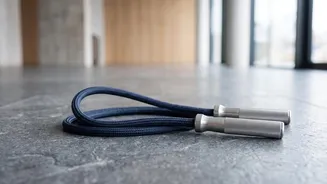
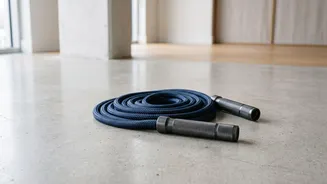
Jumping rope is a plyometric exercise built on a foundation of vertical, explosive rhythm. Unlike running, its primary demand is timing and full-body synchronicity in a relatively stationary position. Every jump requires precise hand-eye-foot coordination: your wrists must flick the rope at the right speed, and your feet must leave the ground at the exact right moment. This constant, repetitive cycle creates a powerful feedback loop. A missed step instantly breaks the rhythm, forcing immediate correction and reinforcing neuromuscular pathways. This type of training excels at developing agility, reaction time, and a fine-tuned internal metronome.
Comparing the Coordination Gains
So, which is better for coordination? It depends entirely on your goals. Running improves your body’s ability to coordinate movement for forward travel and endurance. It trains stability on a single leg while in motion, which is crucial for many sports and daily activities. Jump rope, on the other hand, is superior for developing rhythm, timing, and whole-body synchronisation in a small space. The constant, precise timing required for jumping rope is a skill that directly translates to sports requiring quick footwork and agility, like boxing or basketball. Running builds your ability to maintain a steady cadence over a long duration, while jumping rope fine tunes your ability to execute rapid, rhythmic movements with precision.
Which One Should You Choose?
The choice isn't mutually exclusive; in fact, the two activities complement each other well. Many runners use jump rope to improve their foot speed, calf strength, and coordination. Jumpers might run to build a stronger aerobic base. If your primary goal is to improve balance and efficiency for long distance running, then running itself, supplemented with balance drills, is your best bet. If your goal is to enhance quickness, agility, and the rhythmic timing needed for fast paced sports or simply to challenge your body in a new way, jumping rope offers unique and powerful benefits. Consider what aspect of coordination you wish to develop. For steady state balance and forward motion, run. For explosive timing and full body rhythm, jump.